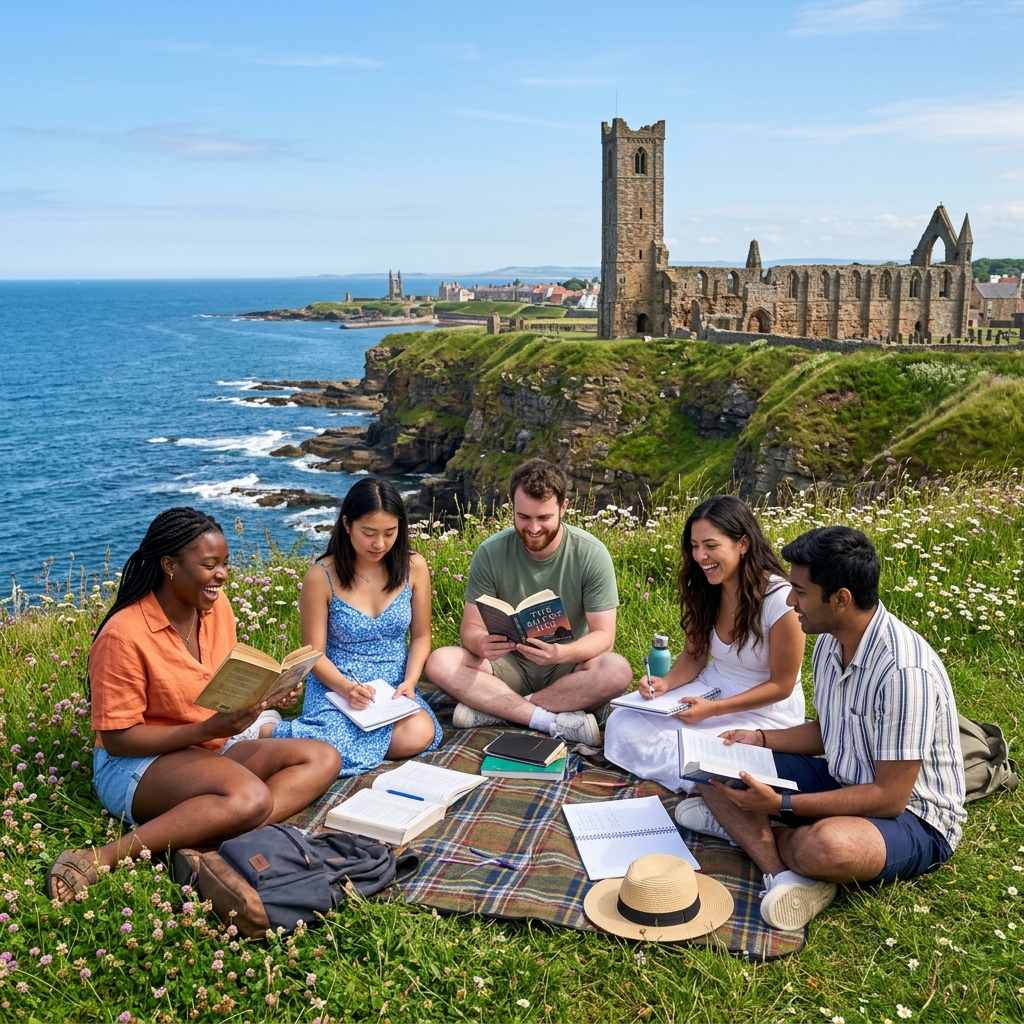
MA Art History and Philosophy
About this course
Art history and philosophy make a pairing of genuine intellectual depth and mutual enrichment. Art history analyses the history, context, style, and meaning of images, objects, and built environments, developing visual literacy and the ability to engage with different critical approaches and theoretical frameworks. Philosophy provides the conceptual rigour to investigate the underlying questions that art raises: what is beauty, what counts as art, how do images communicate meaning, and what is the relationship between aesthetic experience and ethical or political life? Together, they equip you to engage with visual culture at a high level of critical sophistication. At the University of St Andrews, this four-year full-time degree develops your ability to analyse visual culture in its full complexity, exploring how art and its display have both reflected and shaped human history and experience across aesthetics, politics, power, and identity. You will engage with art history across a wide chronological and geographical range, developing skills in formal analysis, historical research, and contextual interpretation, alongside philosophical inquiry into the foundations of aesthetic experience and the nature of visual meaning. A year abroad is integrated into the programme. The typical entry tariff for this programme is not specified in the available data, but St Andrews is a highly selective institution. Graduates from art history and philosophy programmes carry skills in visual analysis, philosophical reasoning, historical research, and critical writing that are valued across many fields. Careers in museums, galleries, auction houses, publishing, journalism, arts administration, education, and cultural policy are natural destinations. The philosophical component adds particular value in any context requiring ethical reasoning, conceptual clarity, or the analysis of arguments. Postgraduate study in art history, philosophy, aesthetics, curatorial practice, or cultural studies is a natural continuation.
Syllabus & Modules
Typical curriculumStudent Satisfaction
National Student Survey - 70 respondents (60% response rate)
Similarly Ranked Alternatives




What comes next? 🎓
Choosing the right university starts with choosing the right school. Explore transparent, data-driven school profiles powered by official DfE statistics.
Explore Schools on WhatSchool.ai →