High Drop-out Rate Alert
25% of students drop out or transfer from this specific course. Consider asking why on an open day.
BSc Banking and International Finance
About this course
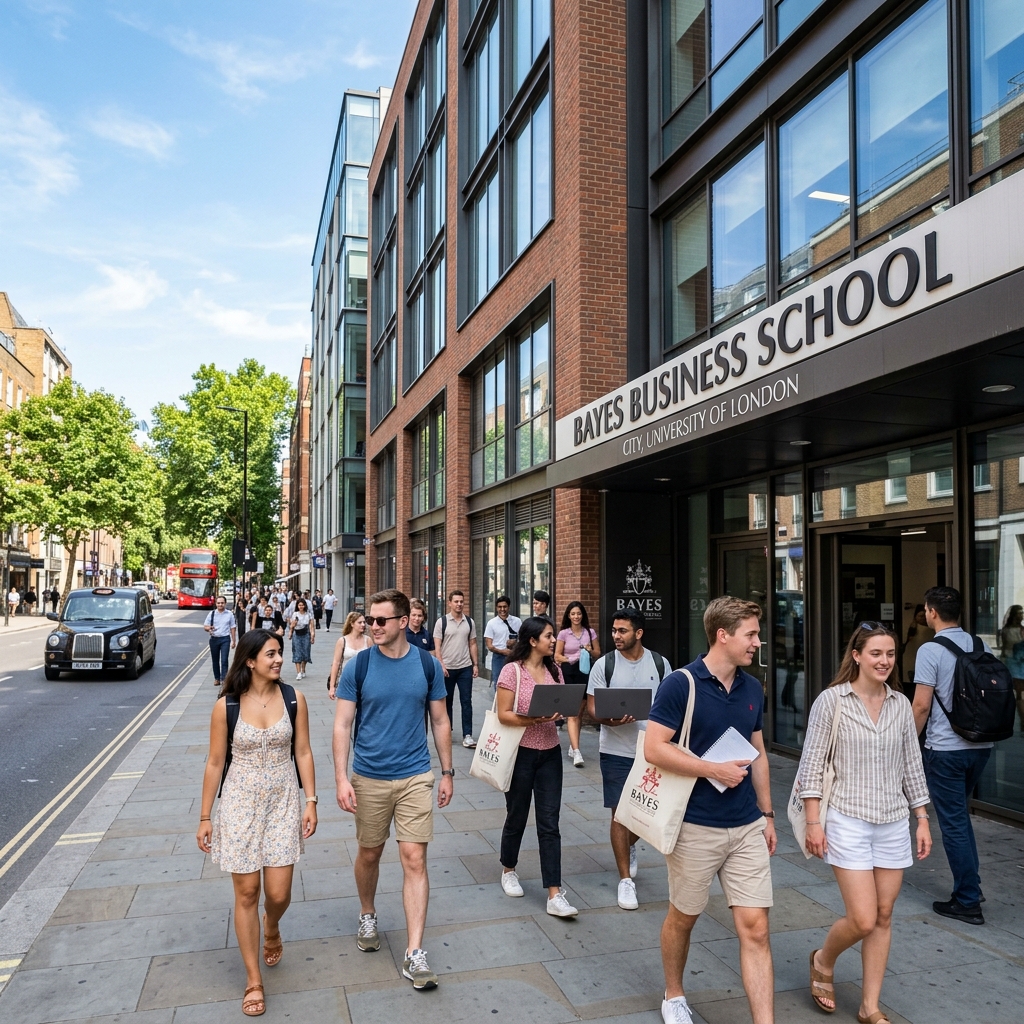
Banking and international finance is a discipline that examines how financial institutions, capital markets, and the global financial system work. It draws on financial theory, economics, and quantitative analysis to address questions about how banks are structured and regulated, how capital moves across borders, how financial risk is managed, and how the international monetary system sustains or disrupts economic activity. In a world where financial crises can spread rapidly across countries and where banks occupy a central position in every economy, the study of banking and international finance is of persistent practical and intellectual importance. At Bayes Business School, part of City St George's, University of London, one of Europe's leading business schools, you will study banking and international finance over three years full-time, developing both the theoretical foundations and the quantitative and analytical skills that the financial sector demands. The programme covers corporate finance, investment banking, risk management, international monetary economics, derivatives, and the regulatory environment of global banking. Bayes's central London location, close to the City's financial institutions, and its strong industry connections give the programme direct access to the professional environment you will be entering. The programme includes a sandwich year and work placement provision, giving you substantial professional experience in a financial institution before you graduate. The typical entry tariff is 152 UCAS points. Graduates pursue careers in investment banking, corporate banking, financial analysis, asset management, risk management, treasury, and fintech. The international dimension of the degree is directly relevant to roles in global financial institutions and cross-border transactions. Many graduates also continue to professional qualifications such as the CFA or to postgraduate study in finance, economics, or financial engineering.
Syllabus & Modules
Typical curriculumStudent Satisfaction
National Student Survey - 25 respondents (92% response rate)
Similarly Ranked Alternatives



What comes next? 🎓
Choosing the right university starts with choosing the right school. Explore transparent, data-driven school profiles powered by official DfE statistics.
Explore Schools on WhatSchool.ai →