MBiochem Biochemistry
About this course
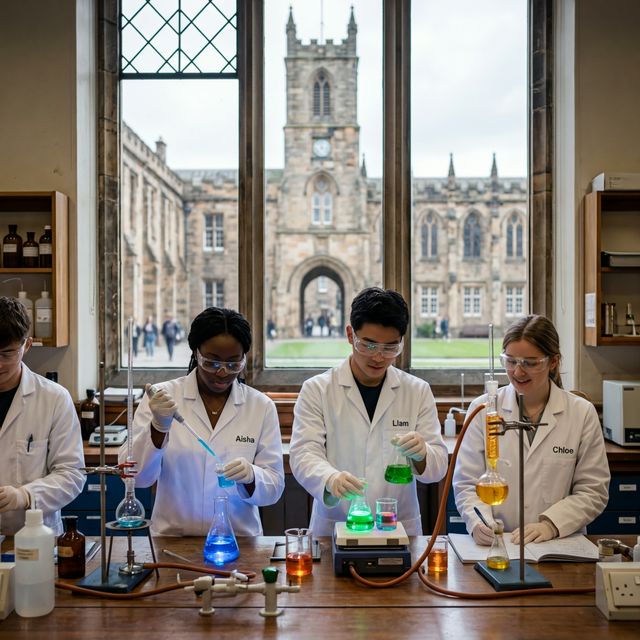
Biochemistry is the chemistry of life. It asks how the molecules that make up living organisms, proteins, nucleic acids, lipids, and carbohydrates, carry out the functions that sustain life, how genes are expressed and regulated, how cells communicate, and how the molecular machinery of the body goes wrong in disease. It is a discipline that sits at the heart of modern biology and medicine, and advances in biochemistry underpin drug discovery, genetic medicine, agricultural biotechnology, and our understanding of evolution at the molecular level. At the University of St Andrews, this five-year full-time MBiochem (Hons) degree gives you a rigorous and comprehensive grounding across the full breadth of biochemistry. You will study the biochemical mechanisms involved in all life processes, from viral replication to neurobiology, covering protein structure and function, regulation, molecular genetics, membrane biology, cell communication, and pharmacology. The depth of the programme increases as you progress, culminating in a final-year laboratory project carried out with one of the research groups in St Andrews' Biomedical Sciences Research Complex, giving you genuine research experience at the frontier of the discipline. A sandwich placement year provides professional experience in a research or industry environment, and a year abroad allows you to engage with biochemistry in an international academic context. Work placement experience is integrated into the programme. St Andrews is one of the world's leading research universities, and the biochemistry teaching environment reflects the quality and ambition of the science being done there. Graduates go on to careers in pharmaceutical and biotechnology research and development, medical research, clinical biochemistry, food science, environmental science, and science communication. Many continue to doctoral study in biochemistry, structural biology, pharmacology, or related fields. The five-year masters degree provides a particularly strong foundation for research careers in both academia and industry.
Syllabus & Modules
Typical curriculumStudent Satisfaction
National Student Survey - 25 respondents (76% response rate)
Similarly Ranked Alternatives

What comes next? 🎓
Choosing the right university starts with choosing the right school. Explore transparent, data-driven school profiles powered by official DfE statistics.
Explore Schools on WhatSchool.ai →