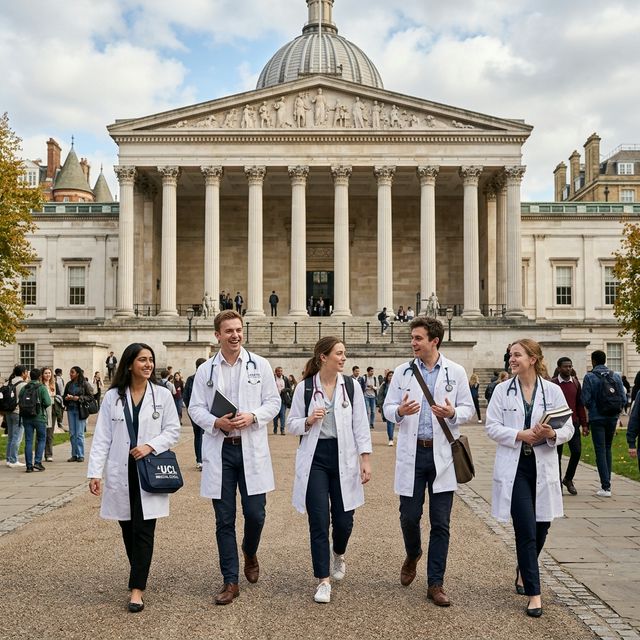
BSc Cancer Biomedicine
About this course
Cancer Biomedicine is a discipline dedicated to understanding one of the most complex and consequential challenges in human biology and medicine. Cancer arises when normal biological processes governing cell growth, repair, and death go wrong, and understanding why that happens, how tumours develop and spread, and how the immune system and other biological mechanisms respond to disease is at the heart of this field. Cancer biomedicine brings together molecular biology, cell biology, genetics, pharmacology, and immunology to study cancer from the most fundamental level upward, with the ultimate aim of developing better treatments, diagnostics, and preventive strategies. At University College London, this three-year full-time programme provides a scientifically rigorous and deeply focused exploration of cancer biology and its biomedical applications. UCL is one of the world's leading research universities and has particular strengths in cancer research, meaning students study in an environment where cutting-edge work in oncology, genomics, and translational medicine is taking place. You will develop a thorough understanding of the molecular mechanisms that drive cancer, the principles of cancer genetics and genomics, the biology of the immune response to tumours, and the scientific basis of therapeutic approaches including chemotherapy, targeted therapies, immunotherapy, and radiotherapy. Laboratory skills, data analysis, and scientific communication will be developed throughout the programme alongside the theoretical content. Graduates from Cancer Biomedicine at UCL are exceptionally well positioned for careers in biomedical research, pharmaceutical and biotechnology development, clinical research support, laboratory medicine, and science communication. The combination of deep subject knowledge and strong research skills makes this degree an excellent foundation for postgraduate study, including research degrees in cancer biology, molecular medicine, or oncology, as well as for entry into medical school via graduate-entry routes. For students with a genuine passion for science and a commitment to addressing cancer, this degree provides one of the most focused and intellectually demanding training environments available in UK higher education.
Syllabus & Modules
Typical curriculumStudent Satisfaction
National Student Survey - 25 respondents (80% response rate)
Similarly Ranked Alternatives
What comes next? 🎓
Choosing the right university starts with choosing the right school. Explore transparent, data-driven school profiles powered by official DfE statistics.
Explore Schools on WhatSchool.ai →