MChem Chemistry (Digital Methods and Computational Modelling)
About this course
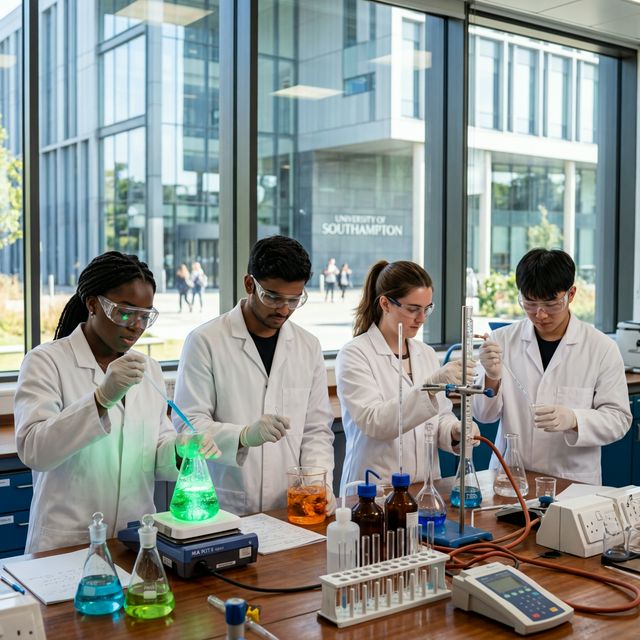
Chemistry is being transformed by digital methods. Computational modelling, machine learning, and data science are changing how chemical research is done, from the simulation of molecular systems to the prediction of drug interactions and the design of new materials. This integration of computational tools with experimental chemistry is not a specialism for a few researchers; it is becoming central to how chemistry is practised across the pharmaceutical, biotechnology, materials, and environmental sectors. Students who graduate fluent in both domains are exceptionally well prepared for careers in these forward-looking industries. At the University of Southampton, this four-year full-time integrated programme is built around exactly this convergence. You will develop a rigorous foundation in core chemistry, including organic, inorganic, physical, and analytical chemistry, alongside training in the digital methods and computational techniques that are reshaping the discipline. You will learn to use computational modelling to simulate chemical systems, apply machine learning approaches to chemistry problems, and work with data science tools as standard parts of your practice as a chemist. Southampton is a research-intensive university with strong links to the pharmaceutical, biotechnology, and healthcare sectors, and the programme is explicitly designed to prepare you for future-focused industries. With a typical entry tariff of 152 UCAS points, this degree attracts students with strong scientific and mathematical ability who want to work at the frontier of an evolving discipline. Graduates are sought after in pharmaceutical research and development, biotechnology, materials science, agrochemical companies, contract research organisations, and data-driven roles across the chemical industry. The combination of chemical expertise and computational skill is a genuine differentiator. Many graduates continue to postgraduate study, including doctoral research in computational chemistry, cheminformatics, drug design, or materials modelling.
Syllabus & Modules
Typical curriculumStudent Satisfaction
National Student Survey - 35 respondents (70% response rate)
Similarly Ranked Alternatives
What comes next? 🎓
Choosing the right university starts with choosing the right school. Explore transparent, data-driven school profiles powered by official DfE statistics.
Explore Schools on WhatSchool.ai →