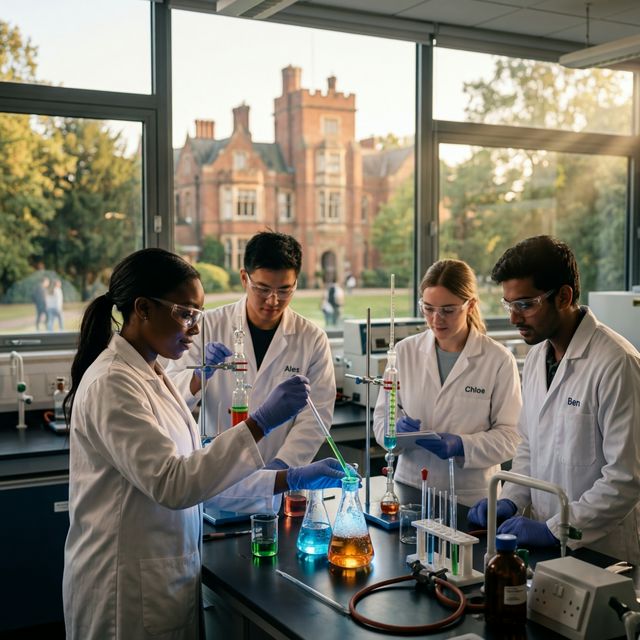
BSc Chemistry, Green Principles and Sustainable Processes
About this course
Chemistry focused on green principles and sustainable processes addresses what is increasingly understood as one of chemistry's most important contributions to the contemporary world: the redesign of chemical products and processes to minimise environmental impact, reduce waste, and move away from dependence on finite or hazardous materials. At the University of York, the BSc Chemistry, Green Principles and Sustainable Processes is a three-year full-time programme that includes a sandwich year and work placement, developing both the core scientific knowledge that all chemists require and the specific expertise in green and sustainable chemistry that the industry and wider society increasingly demand. As the current description notes, the programme develops adaptable chemists through research-led practical and classroom sessions, preparing graduates to work in a range of sectors that thrive on innovation. The core chemistry content covers organic, inorganic, and physical chemistry at a rigorous level, developing practical laboratory skills alongside theoretical understanding. The green chemistry dimension introduces you to the principles of atom economy, the avoidance of hazardous reagents, the design of safer synthesis routes, the use of renewable feedstocks, and the assessment of environmental impact across the lifecycle of chemical products. York is one of the UK's leading chemistry departments with strong research in sustainability and green chemistry, and the programme benefits from the intellectual environment this creates. The sandwich year places you in industry, developing professional experience and demonstrating your skills in a real chemical or related environment. Graduates of this programme are well positioned for careers in the chemical and pharmaceutical industries, environmental consultancy, materials science, food and consumer goods, and the growing renewable energy sector. Green chemistry expertise is increasingly valued as companies face regulatory, investor, and consumer pressure to reduce environmental impacts. Roles in research and development, process chemistry, formulations, analytical chemistry, environmental management, and sustainability reporting are all accessible. Many graduates go on to doctoral research in green chemistry, sustainable synthesis, or materials chemistry, contributing to the next generation of research in this vital area. The combination of fundamental chemical training and sustainability expertise that York's programme provides is a forward-looking and commercially relevant qualification.
Syllabus & Modules
Typical curriculumStudent Satisfaction
National Student Survey - 135 respondents (76% response rate)
Similarly Ranked Alternatives
What comes next? 🎓
Choosing the right university starts with choosing the right school. Explore transparent, data-driven school profiles powered by official DfE statistics.
Explore Schools on WhatSchool.ai →