
High Drop-out Rate Alert
30% of students drop out or transfer from this specific course. Consider asking why on an open day.
MChem Chemistry with Industrial Experience
About this course
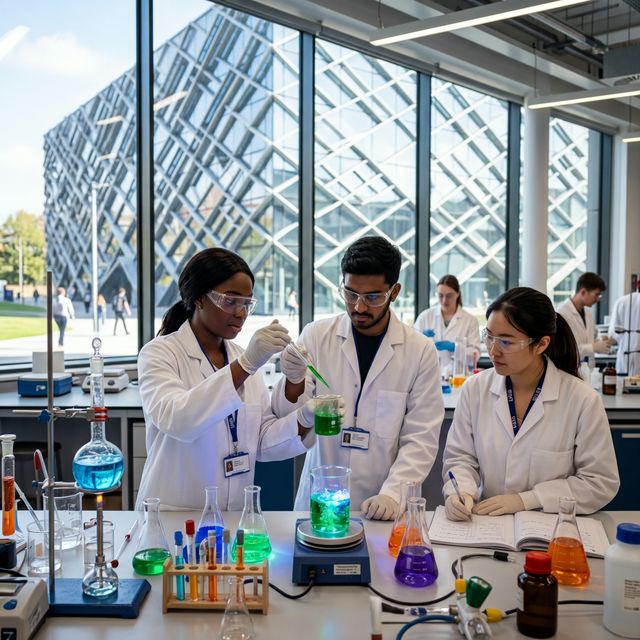
Chemistry is often described as the central science because it sits between and connects the physical sciences, the life sciences and the applied sciences. It explores matter at the level of atoms and molecules, asking how substances are structured, why they react in the ways they do, and how new materials and compounds can be designed and synthesised with specific properties. From drug discovery and materials engineering to food science, environmental monitoring and energy storage, chemistry underpins an extraordinary range of industries and research fields. At the University of Huddersfield, this four-year full-time programme includes a foundation year and an industrial experience placement, integrating real-world professional practice directly into your degree. The university has a long history of chemistry education, and the programme provides a strong grounding in the core areas of analytical, organic, inorganic and physical chemistry, while also offering specialisations that allow you to develop expertise in areas that match your interests and career goals. You will develop both theoretical understanding and practical laboratory skills, learning to design experiments, analyse results and communicate your findings clearly. The industrial experience component gives you the opportunity to apply your chemistry knowledge in a professional setting, building the practical competence and professional awareness that employers value. Chemistry graduates are among the most versatile in the scientific workforce. Careers span pharmaceuticals, chemical manufacturing, materials science, petrochemicals, agrochemicals, environmental science, food and drink, cosmetics and forensic science. Many graduates go on to postgraduate study at masters or doctoral level, particularly in organic synthesis, analytical chemistry, materials or pharmaceutical chemistry. The rigorous quantitative and problem-solving skills developed through chemistry are also valued in finance, consulting and data-driven roles, giving chemistry graduates options well beyond the laboratory.
Syllabus & Modules
Typical curriculumStudent Satisfaction
National Student Survey - 45 respondents (88% response rate)
Similarly Ranked Alternatives


What comes next? 🎓
Choosing the right university starts with choosing the right school. Explore transparent, data-driven school profiles powered by official DfE statistics.
Explore Schools on WhatSchool.ai →