High Drop-out Rate Alert
20% of students drop out or transfer from this specific course. Consider asking why on an open day.
BSc Computer Science
About this course
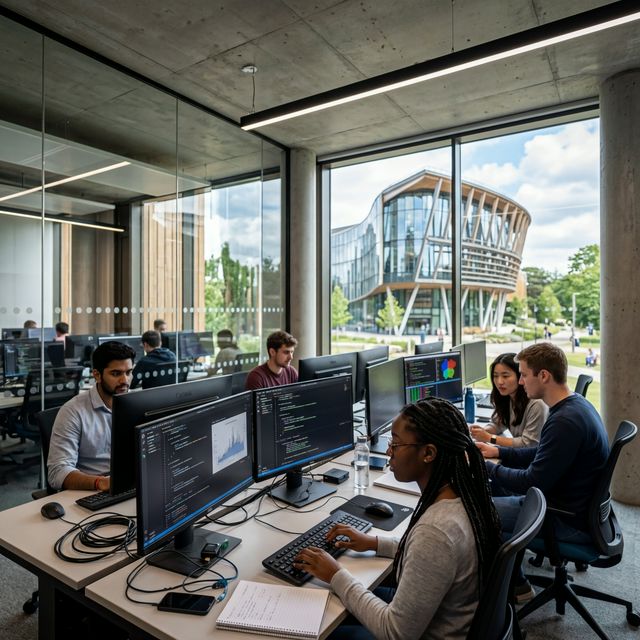
Computer science is the discipline that underpins the digital world, concerned with the theory and practice of computation: how problems can be represented, how algorithms can solve them efficiently, how software is designed and built to be reliable, and how hardware and software systems interact. It is a field of both deep intellectual content, drawing on mathematics and logic, and immediate practical relevance, since the systems that computer scientists design and build are central to almost every aspect of modern life. At Southampton Solent University, this three-year full-time programme is accredited by BCS, the Chartered Institute for IT, which provides independent assurance of the programme's quality and relevance to the profession. The degree includes a foundation year, making it accessible to students who are building the technical and mathematical foundations needed for computer science at degree level, and it also includes a sandwich year and work placement, giving you extended professional experience before you complete your studies. The programme allows you to find your specialism, as the current description notes, covering core areas of the discipline including programming, algorithms and data structures, software engineering, databases, networks, and operating systems, alongside specialist areas such as cybersecurity and data analysis. Problem-solving skills are developed throughout, along with the ability to create innovative technological solutions, which reflects the real demands of professional software development. The BCS accreditation supports those who wish to pursue Chartered IT Professional status, and the combination of a strong academic foundation with extensive practical experience through the placement prepares you well for the graduate technology market. Computer science graduates work across virtually every sector of the economy in roles including software development, systems architecture, cybersecurity, data engineering, devops, cloud computing, and technical consultancy. Many graduate directly into well-paid roles in technology companies, financial services, healthcare technology, and government digital services. Postgraduate study is available for those wishing to develop specialist expertise or pursue research.
Syllabus & Modules
Typical curriculumStudent Satisfaction
National Student Survey - 25 respondents (83% response rate)
Similarly Ranked Alternatives



What comes next? 🎓
Choosing the right university starts with choosing the right school. Explore transparent, data-driven school profiles powered by official DfE statistics.
Explore Schools on WhatSchool.ai →