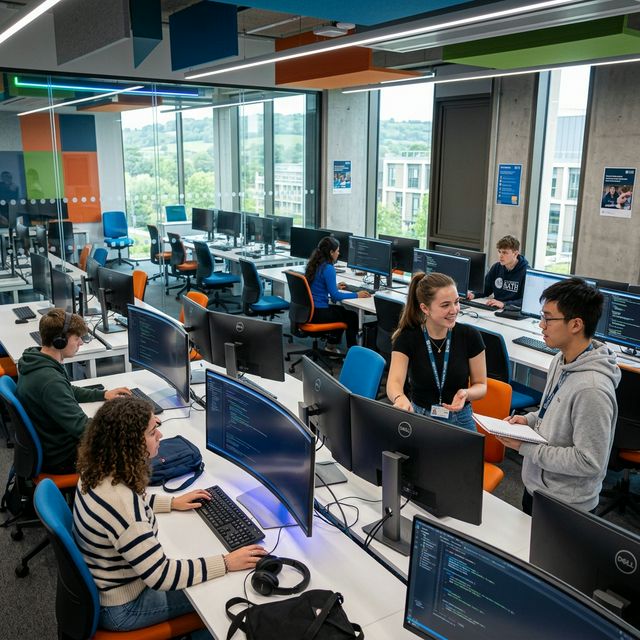
BSc Computer Science
About this course
Computer science is the discipline that underpins the digital world. It is concerned with how computation works, how algorithms can solve problems efficiently, how software is designed and built, and how complex systems are structured and made reliable. From artificial intelligence and machine learning to networks, databases, operating systems, and programming languages, computer science provides the foundational knowledge that makes modern technology possible. Studying it at degree level gives you not just practical coding skills but the theoretical depth to understand why those skills work and how to apply them to problems that do not yet exist. This three-year full-time programme at the University of Bath is highly selective, with a typical tariff of 200 points, reflecting the strong mathematical and logical foundations required for degree-level computer science. Bath has an excellent reputation for computer science, combining rigorous academic teaching with strong industry connections. The programme covers the core areas of the discipline: algorithms and data structures, programming, software engineering, computer architecture, networks, and theory of computation, alongside more advanced topics in areas such as artificial intelligence, machine learning, security, and human-computer interaction. You will develop the ability to think algorithmically, to write clean, correct, and efficient code, to design and evaluate systems, and to reason formally about computational problems. These are skills in high demand across virtually every sector of the economy, and Bath's graduates are consistently sought after by employers ranging from technology companies to financial services, consultancy, defence, and the public sector. Graduates from this programme move into careers as software engineers, data scientists, systems architects, AI researchers, security specialists, product managers, and technology consultants. The breadth of computer science means that a well-trained graduate is employable across an extraordinarily wide range of roles. Many continue to postgraduate study, either to deepen their expertise in a specific area or to move into research, and some go on to found technology companies.
Syllabus & Modules
Typical curriculumStudent Satisfaction
National Student Survey - 25 respondents (72% response rate)
Similarly Ranked Alternatives

What comes next? 🎓
Choosing the right university starts with choosing the right school. Explore transparent, data-driven school profiles powered by official DfE statistics.
Explore Schools on WhatSchool.ai →