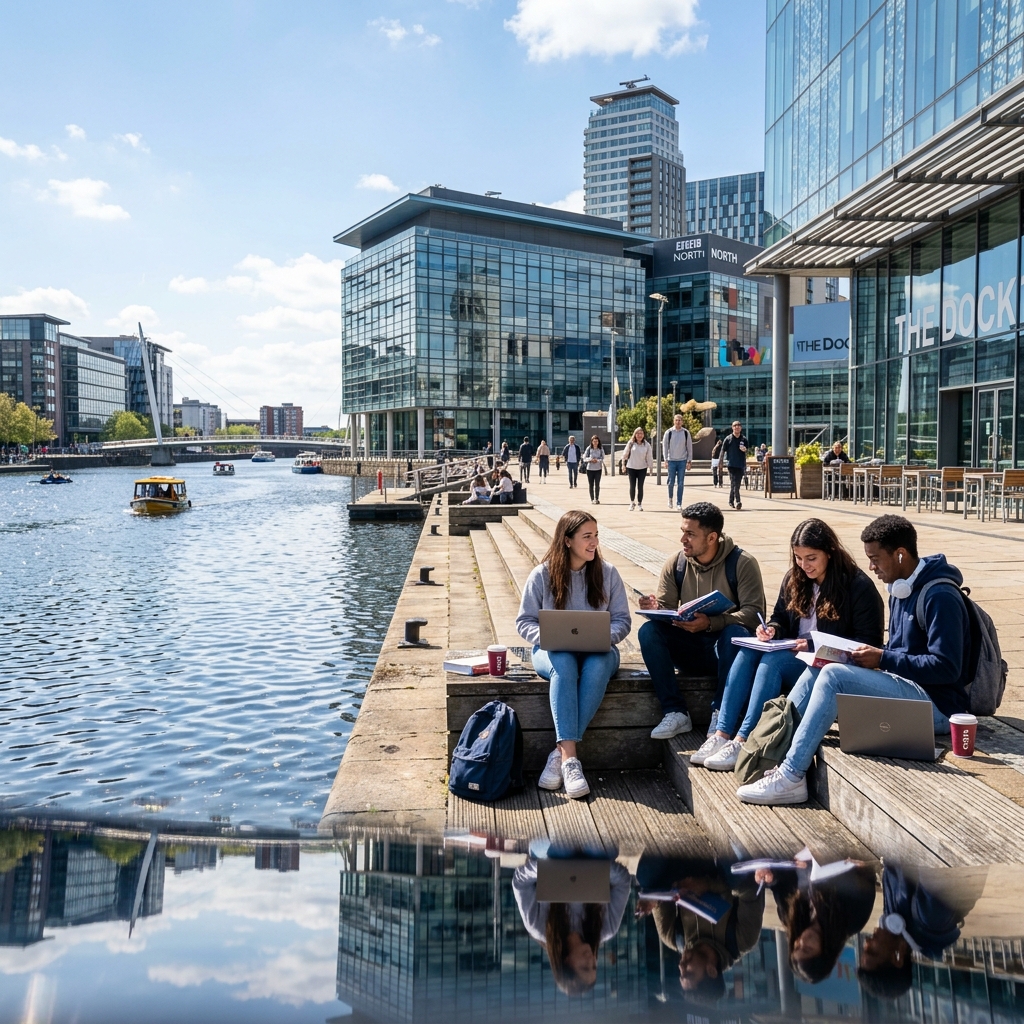
BSc Creative Computing with Foundation Year
About this course
Creative computing sits at the productive boundary between technology and creative practice, bringing computing skills to bear on questions that have traditionally belonged to the arts, design, and media. It is a discipline for people who want to make things with technology, whether that means interactive experiences, digital art, games, data visualisations, or software tools for creative production. The ability to program and to think computationally is increasingly central to a huge range of creative professions, and creative computing gives you both the technical foundation and the imaginative orientation to work effectively in that space. At the University of Salford, this four-year full-time programme begins with a foundation year designed to give you a thorough grounding in the subject before you progress to the degree proper. The foundation year builds your understanding of computing and creative technology at a pace that suits students coming from a range of educational backgrounds, developing both technical confidence and creative capability. From there, the degree develops your programming skills, understanding of interactive design, and ability to work across digital media, exploring areas such as web development, audio-visual production, user experience design, and creative software development. The programme encourages you to develop your own creative and technical identity, experimenting with different approaches and finding the combinations that excite and challenge you. Graduates from creative computing programmes are well placed for careers at the intersection of technology and creative industries. Roles include web developer, interactive media designer, UX designer, game developer, digital artist, creative technologist, and software developer in media or arts organisations. The technical skills you develop also open doors in broader software development and data roles. Further study at postgraduate level in digital media, interaction design, games, or computer science is available for those who wish to specialise further or pursue research.
Syllabus & Modules
Typical curriculumStudent Satisfaction
National Student Survey - 20 respondents (100% response rate)
Similarly Ranked Alternatives
What comes next? 🎓
Choosing the right university starts with choosing the right school. Explore transparent, data-driven school profiles powered by official DfE statistics.
Explore Schools on WhatSchool.ai →