MA Economics and German
About this course
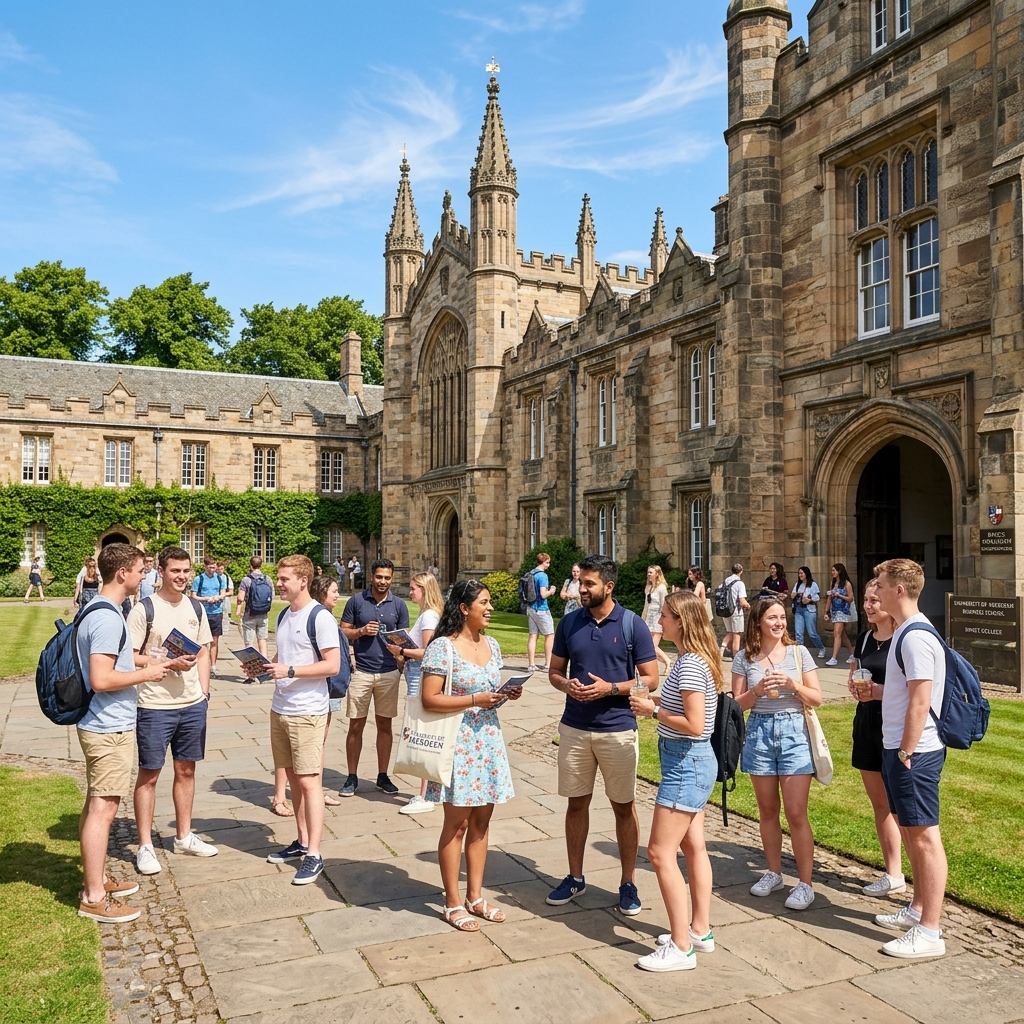
Economics and German is a combination that pairs the analytical power of a modern economics education with the linguistic and cultural knowledge that comes from studying one of Europe's most significant languages. Germany is Europe's largest economy, a central player in the European Union, and a country whose history and institutional character have shaped the continent in profound ways. Studying German alongside economics gives you direct access to that world, not mediated by translation, and positions you strongly for careers in European and international organisations and business. At the University of Aberdeen, this five-year full-time programme gives you a solid grounding in the global economy and in the theoretical and empirical tools that economists use to understand it, alongside progressive development of your German language proficiency and your knowledge of German and German-speaking cultures. Aberdeen's generous degree structure means you have time to develop both disciplines to a high level, exploring microeconomics, macroeconomics, econometrics, and the economic analysis of policy questions alongside literature, culture, contemporary affairs, and language in use. A typical entry tariff of 152 points applies. The economics strand develops your quantitative and analytical skills, equipping you to evaluate evidence, model behaviour, and engage with the empirical literature in the field. The German strand develops linguistic proficiency, cross-cultural understanding, and the ability to operate professionally in a second language. Together, they produce a graduate with a genuinely rare profile in the UK job market. Graduates from economics and German programmes are well placed for careers in international business, the civil service and diplomatic service, European institutions, economic consultancy, banking, financial services, translation and interpreting, journalism, and non-governmental organisations. Postgraduate study in economics, European studies, international relations, or translation is also a natural route for those wishing to deepen their expertise.
Syllabus & Modules
Typical curriculumStudent Satisfaction
National Student Survey - 65 respondents (65% response rate)
Similarly Ranked Alternatives



What comes next? 🎓
Choosing the right university starts with choosing the right school. Explore transparent, data-driven school profiles powered by official DfE statistics.
Explore Schools on WhatSchool.ai →