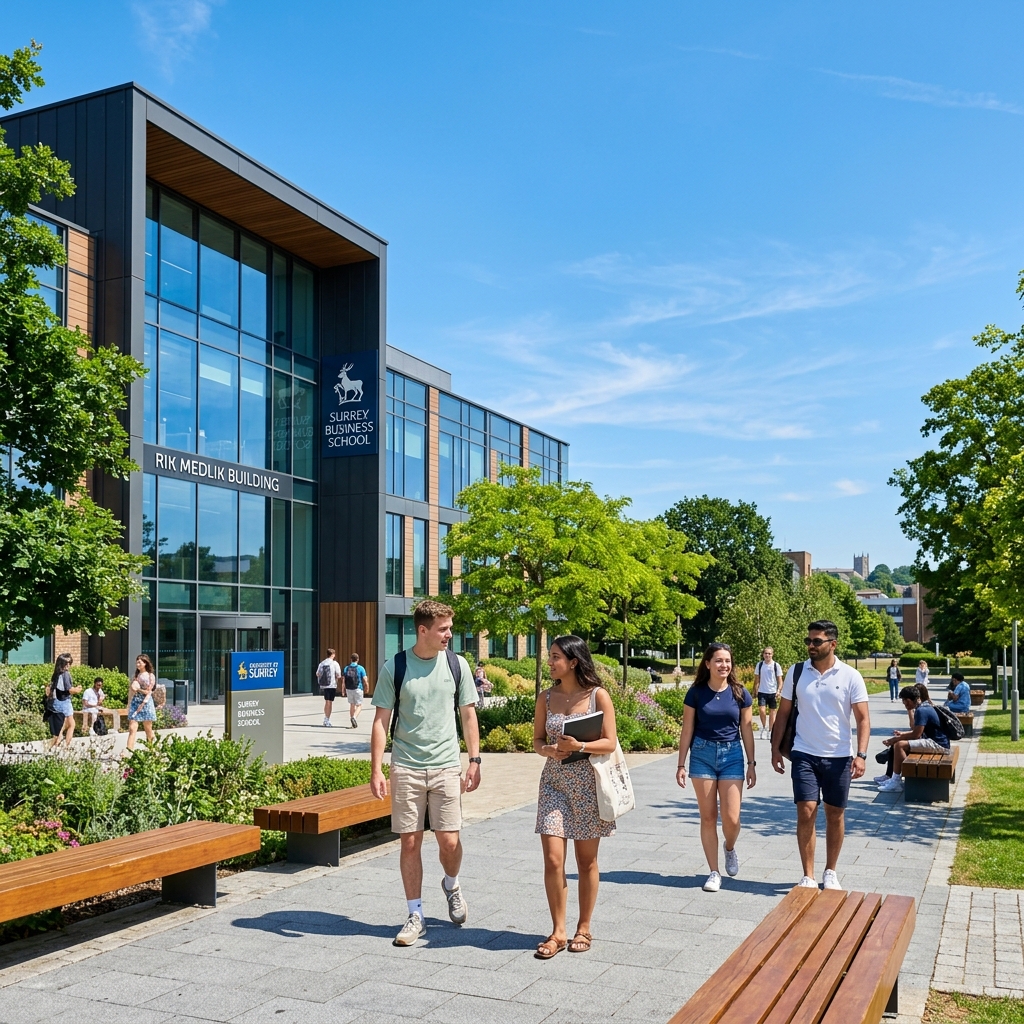
BSc Economics and Mathematics
About this course
Economics and mathematics is one of the most intellectually powerful and professionally valuable degree combinations available. Economics provides the frameworks for understanding how markets, firms, households, and governments make decisions and how those decisions aggregate into the patterns of production, employment, and distribution that shape societies. Mathematics gives you the tools to formalise, model, and test those frameworks with rigour, moving economics from verbal intuition to quantitative precision. The two disciplines have a natural and deep affinity: modern economics is thoroughly mathematical, and the most significant contributions to the field have come from people who could move fluently between economic reasoning and formal mathematical argument. At the University of Surrey, this three-year full-time programme develops your expertise across both disciplines, building rigorous mathematical skills alongside a thorough grounding in microeconomics, macroeconomics, econometrics, and economic policy. Surrey notes that the curriculum integrates digital skills and the ability to work with AI tools, reflecting a commitment to preparing graduates for the evolving demands of employers in economics, finance, and policy. You will develop both the theoretical depth and the quantitative methods that the most demanding analytical roles in economics and finance require. Graduates in economics and mathematics are in high demand across finance, economic consultancy, the civil service economic fast stream, data science, and analytical roles in business and the public sector. Careers as economic analyst, financial economist, quantitative researcher, data scientist, and actuary are natural destinations. The mathematical rigour that this degree adds to economic training is particularly valued in roles that require serious quantitative work, including financial modelling, economic forecasting, and policy analysis. Many graduates also pursue postgraduate study in economics, econometrics, or financial mathematics, developing the advanced expertise needed for research and senior professional roles.
Syllabus & Modules
Typical curriculumStudent Satisfaction
National Student Survey - 40 respondents (67% response rate)
Similarly Ranked Alternatives

What comes next? 🎓
Choosing the right university starts with choosing the right school. Explore transparent, data-driven school profiles powered by official DfE statistics.
Explore Schools on WhatSchool.ai →