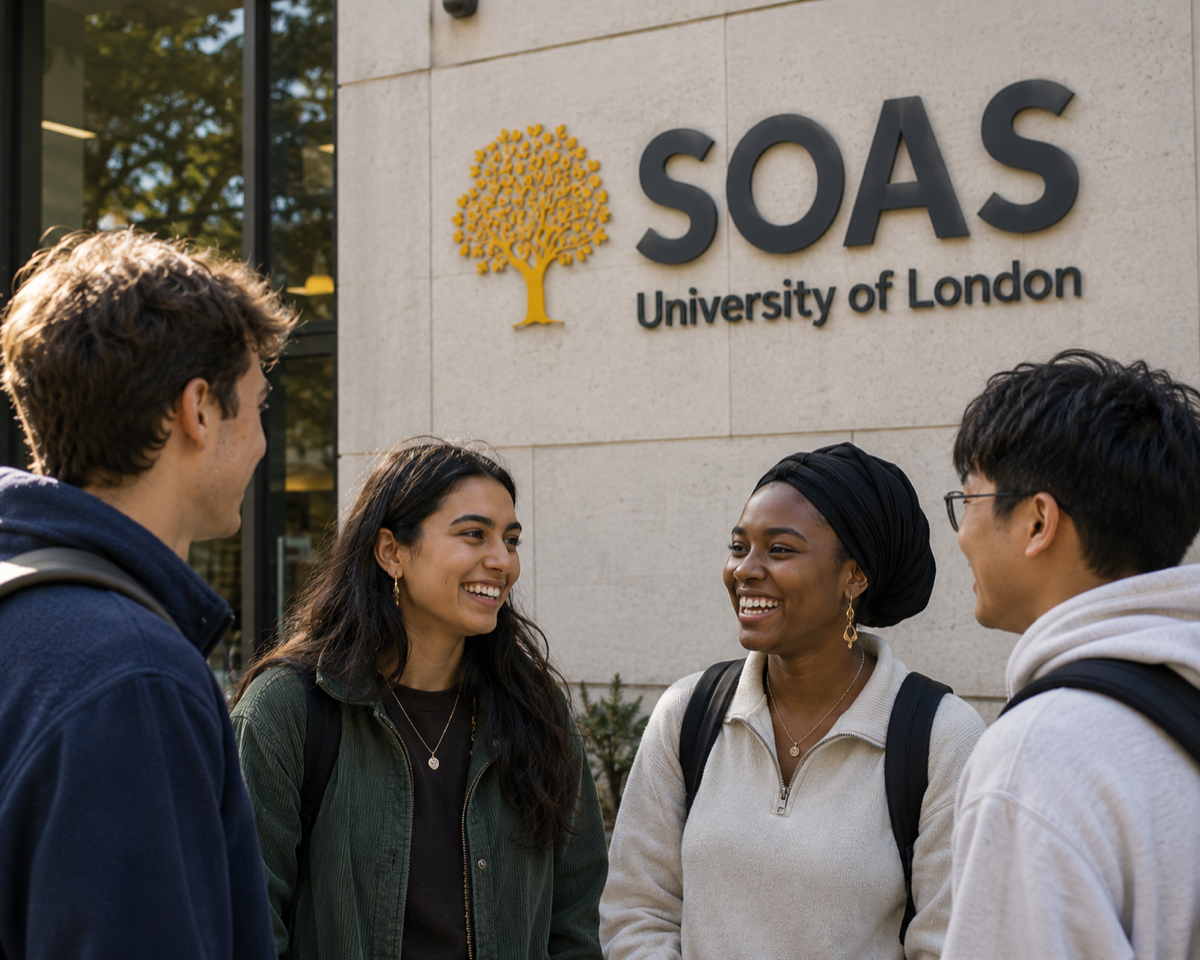
BA Economics (BA) with Year in Industry
About this course
Economics is concerned with how individuals, organisations, and governments make decisions under conditions of scarcity, and with the consequences of those decisions for markets, societies, and the world economy. It is a discipline that combines rigorous analytical thinking with a genuine concern for real-world problems, from inflation and inequality to trade, development, and the allocation of public resources. For students drawn to understanding why economies behave as they do, and what policy interventions might improve outcomes, economics offers both a powerful intellectual framework and a highly transferable set of skills. At the School of Oriental and African Studies, this BA programme offers training in microeconomics, macroeconomics, and quantitative methods within a distinctive institutional setting. SOAS's particular strength lies in its focus on Asia, Africa, and the Middle East, meaning economic questions are considered in relation to development economics, international finance, and the political economy of regions often overlooked by more conventional curricula. You will study the core tools of economic analysis while also developing a critical perspective on how economic theory is applied across different cultural and political contexts. The programme includes a foundation year, which provides an additional year of preparation before the main degree begins, making it well suited to students who wish to strengthen their mathematical and analytical foundations before progressing to more advanced economic theory. The Year in Industry is built into the programme and runs over four years in total. This placement gives you structured exposure to working environments in finance, policy, consultancy, international organisations, or other economics-related sectors, allowing you to test and develop your skills in practice and to build professional networks before you graduate. Economics graduates are sought after across an exceptionally wide range of sectors. Many enter finance, banking, and investment management, while others move into economic consultancy, government departments, international development organisations, central banks, and the civil service. The quantitative and analytical skills you build are also highly valued in data analysis and business strategy roles. Postgraduate study in economics, finance, public policy, or international relations is another well-trodden path, and the SOAS network offers particular advantages for those interested in careers connected to the Global South.
Syllabus & Modules
Typical curriculumStudent Satisfaction
National Student Survey - 120 respondents (67% response rate)
Similarly Ranked Alternatives

What comes next? 🎓
Choosing the right university starts with choosing the right school. Explore transparent, data-driven school profiles powered by official DfE statistics.
Explore Schools on WhatSchool.ai →