High Drop-out Rate Alert
20% of students drop out or transfer from this specific course. Consider asking why on an open day.
BA Economics
About this course
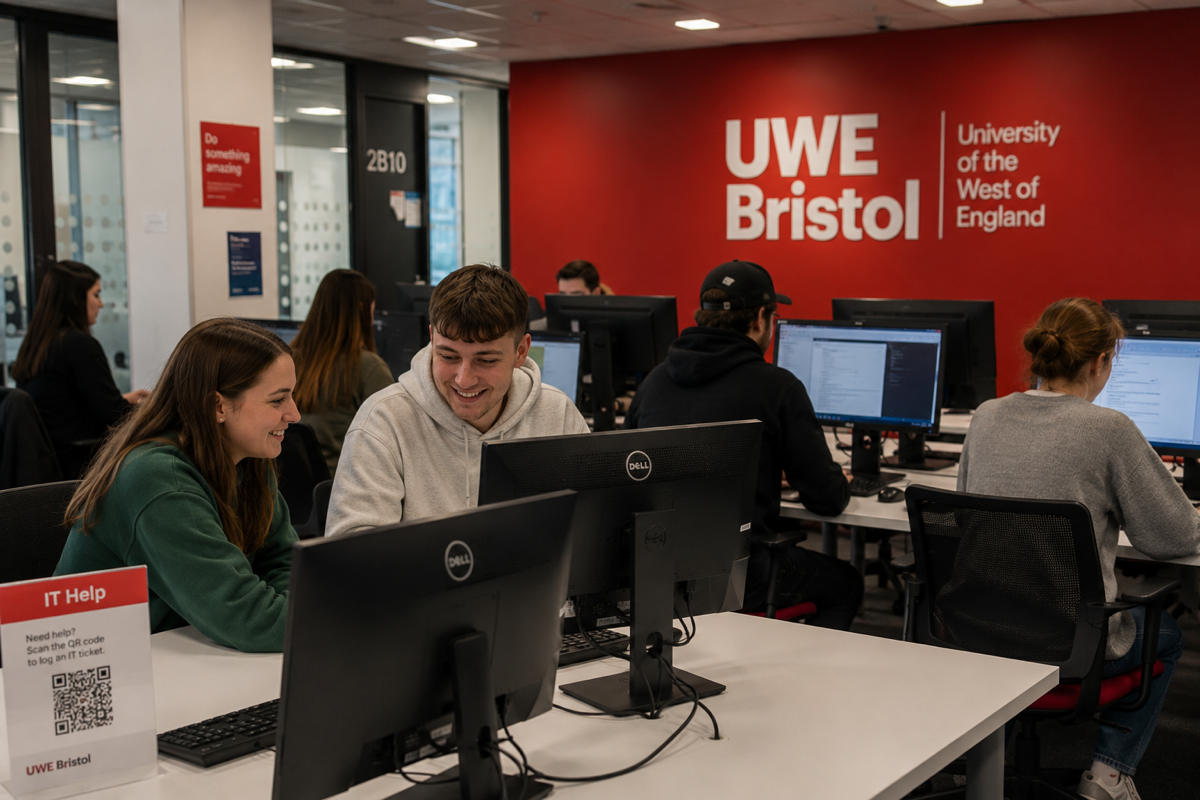
Economics is the study of how individuals, firms, and governments make decisions about scarce resources, and how those decisions interact to produce the patterns of production, employment, trade, and distribution that shape our world. It is a discipline that combines mathematical rigour with social scientific insight, asking why markets sometimes fail, how economic policy shapes outcomes, and what forces drive growth, inequality, and change. Studying economics at degree level gives you powerful analytical tools that are applicable to a remarkable range of problems and professional contexts. At the University of the West of England, Bristol, this three-year full-time programme prepares you to solve current and future problems that matter while developing your employability. You will study economics through interdisciplinary lenses, mastering economic knowledge and analytical skills for professional impact, as the course description captures. You will engage with microeconomics, macroeconomics, econometrics, and economic policy, developing both theoretical understanding and the quantitative methods that modern economics requires. The programme includes a sandwich placement year, a year abroad, and work placements, giving you substantial professional experience, international exposure, and industry connections that make the degree significantly more than purely academic preparation. Economics graduates are among the most sought-after by graduate employers. Common career destinations include economic analysis, financial services, banking, management consultancy, government economic roles, international organisations, data science, and the civil service analytical fast stream. The analytical and quantitative skills economics builds are also valuable in technology, public policy, journalism, and any professional role that involves understanding evidence, modelling scenarios, and making decisions under uncertainty. Many graduates also pursue postgraduate study in economics, finance, public policy, or data science, developing deeper expertise for senior professional or research roles.
Syllabus & Modules
Typical curriculumStudent Satisfaction
National Student Survey - 20 respondents (78% response rate)
Similarly Ranked Alternatives
What comes next? 🎓
Choosing the right university starts with choosing the right school. Explore transparent, data-driven school profiles powered by official DfE statistics.
Explore Schools on WhatSchool.ai →