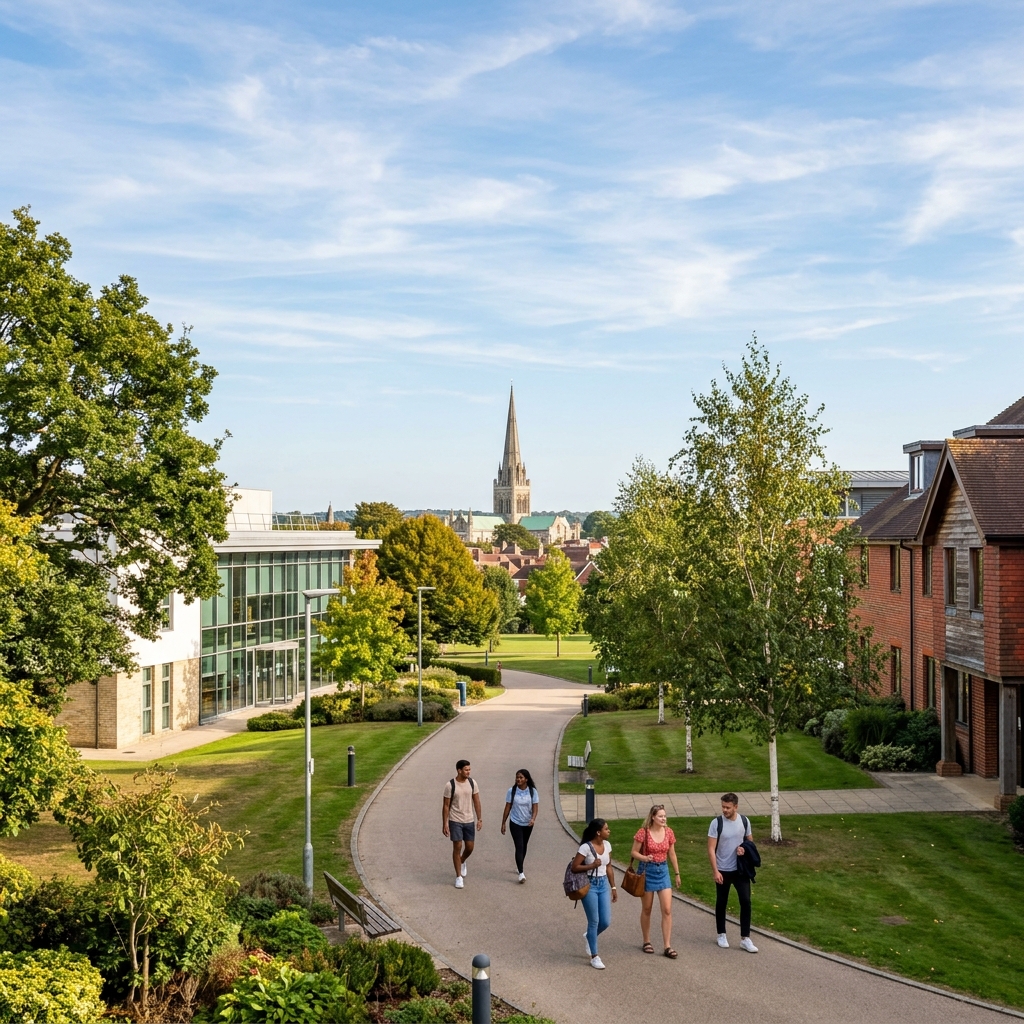
BA Education, Special Needs and Disability
About this course
Education, special needs, and disability is a discipline that asks how societies should support learners whose needs differ from the assumed norm, and how educational systems can be made genuinely inclusive. It draws on developmental psychology, social policy, disability studies, and pedagogy to examine how special educational needs are identified and responded to, how legislation shapes practice, and how professionals working with children and young people can provide the kind of support that makes a real difference to lives and outcomes. These are not merely academic questions: they matter directly for the quality of everyday experience for millions of learners and their families. At Chichester, this programme is designed to develop your understanding of the combined subjects of education, special needs, and disability, giving you both the theoretical grounding and the practical awareness needed to work in these fields. You will study child development, inclusion policy, disability frameworks, communication and language needs, and approaches to supporting diverse learners in educational settings. You will develop skills in critical analysis and reflective practice that are central to work in this area, learning to examine evidence, question assumptions, and apply understanding to real contexts. The programme runs over three years full-time, with a typical entry tariff of 72 points. Graduates of programmes in education, special needs, and disability pursue careers in teaching and SENCO roles in schools, as specialist support workers and teaching assistants, in local authority SEND services, in social care, in charities and advocacy organisations, and in research and policy development. The degree provides a strong foundation for further professional training, including Qualified Teacher Status, social work qualification, or postgraduate study in educational psychology, SEND, or inclusive education.
Syllabus & Modules
Typical curriculumStudent Satisfaction
National Student Survey - 20 respondents (91% response rate)
Similarly Ranked Alternatives




What comes next? 🎓
Choosing the right university starts with choosing the right school. Explore transparent, data-driven school profiles powered by official DfE statistics.
Explore Schools on WhatSchool.ai →