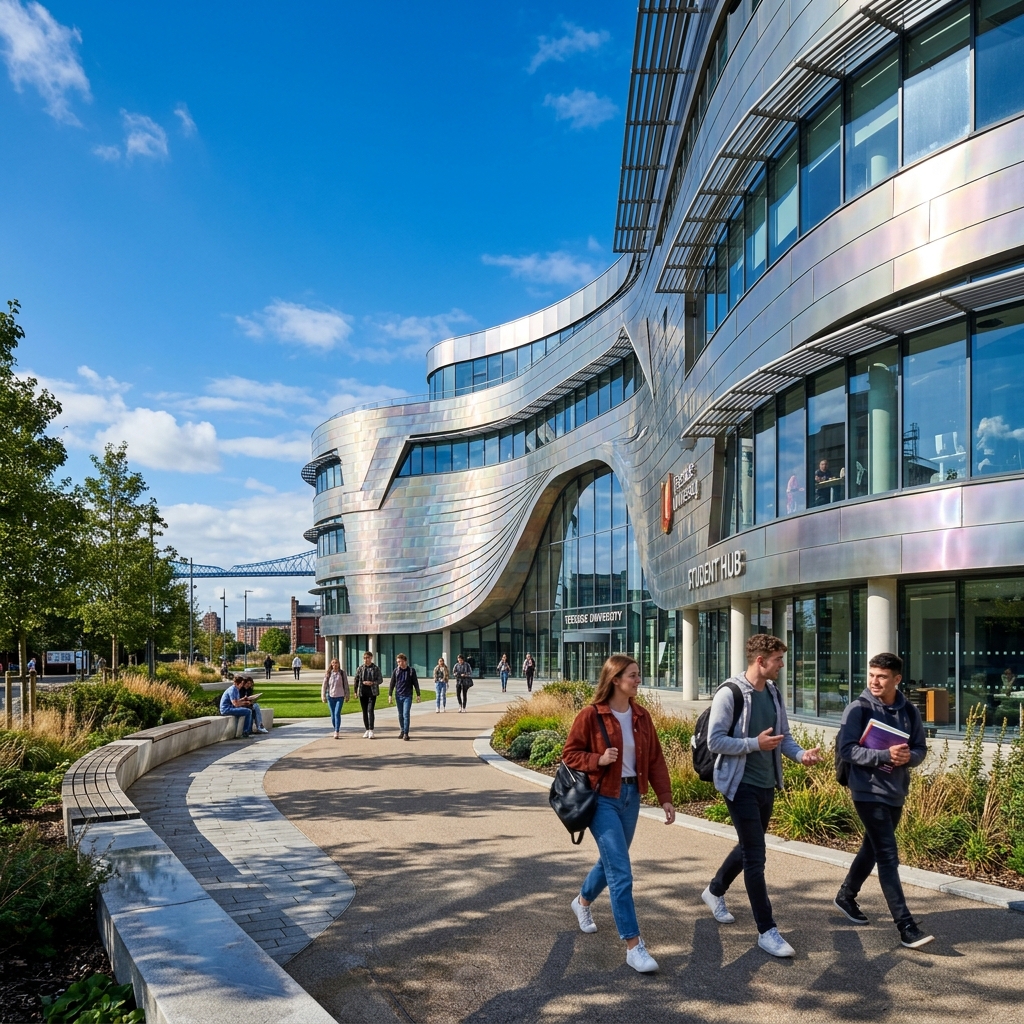
BEng Electrical and Electronic Engineering
About this course
Electrical and electronic engineering underpins the modern world in ways that are almost impossible to overstate. Every device that generates, stores, distributes, or uses electrical energy, and every system that processes, transmits, or displays electronic information, relies on the knowledge and skills this discipline develops. From power electronics and renewable energy systems to microprocessors, sensors, communications networks, and medical devices, the applications of electrical and electronic engineering span every sector of the economy. This three-year full-time degree at Teesside University includes a sandwich placement year and embedded work placement experience. You will develop a rigorous understanding of the physical principles that govern electrical circuits and electronic systems, building analytical skills in circuit theory, analogue and digital electronics, and the mathematical methods that electrical engineers apply in professional practice. Topics covered include the behaviour of circuits under both direct current and alternating current conditions, magnetic and electric field theory, and the analysis of inductors, capacitors, and resistors. The programme builds from these fundamentals towards more advanced topics in areas such as digital systems, signal processing, power systems, and communications, developing the technical range that a professional engineer needs. The sandwich year provides twelve months of professional experience in an engineering environment, where you can apply your learning to real projects and develop the practical competence that accelerates your career. An entry tariff of 88 UCAS points reflects an inclusive admissions approach to a technically demanding programme. Graduates from electrical and electronic engineering degrees are consistently among the most sought-after in the country, with career opportunities spanning power generation and distribution, renewable energy, telecommunications, defence, automotive and aerospace engineering, healthcare technology, and consumer electronics. Many pursue Incorporated or Chartered Engineer status.
Syllabus & Modules
Typical curriculumStudent Satisfaction
National Student Survey - 10 respondents (92% response rate)
Similarly Ranked Alternatives


What comes next? 🎓
Choosing the right university starts with choosing the right school. Explore transparent, data-driven school profiles powered by official DfE statistics.
Explore Schools on WhatSchool.ai →