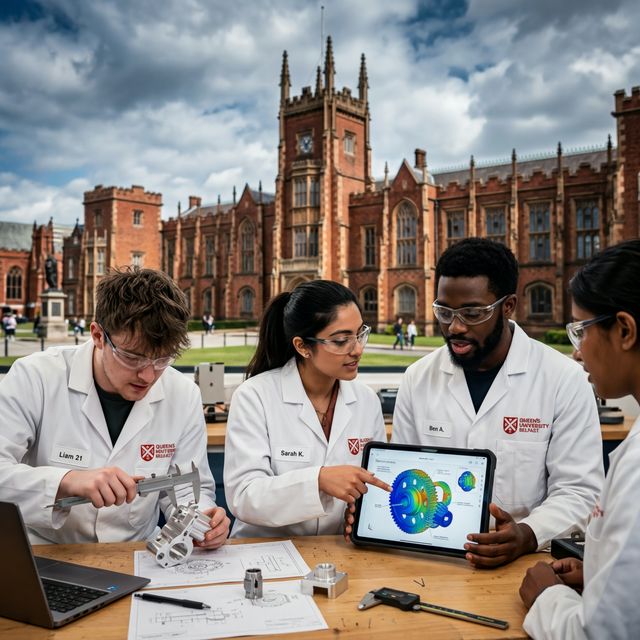
MEng Environmental and Civil Engineering
About this course
Environmental and civil engineering sits at the intersection of the built and natural worlds, concerned with the design, construction, and management of the infrastructure on which modern society depends while responding to the environmental consequences of that infrastructure and seeking to minimise its impact on the natural systems it affects. Roads, bridges, water supply systems, flood defences, wastewater treatment, transportation networks, and coastal structures are all within the scope of the discipline, as are the environmental assessments and sustainability strategies that increasingly frame how engineering decisions are made. As urbanisation accelerates and the effects of climate change demand new approaches to infrastructure resilience, environmental and civil engineers are among the most urgently needed professionals of the coming decades. At Queen's University Belfast, this four-year full-time degree covers structural engineering, geotechnics, water engineering, transport, and project management alongside the environmental dimensions of the discipline, including sustainability assessment, environmental impact, and the management of natural resources such as water, energy, and land. You will develop the technical skills of a practising engineer alongside an understanding of the environmental context within which engineering decisions are made, equipping you to tackle the challenge of delivering sustainable infrastructure for an increasingly urbanised world. The degree includes a year abroad, giving you the opportunity to study engineering in a different national and academic context and to develop the international perspective that the global nature of modern infrastructure projects demands. Graduates are in strong demand across the construction and infrastructure sectors. Career pathways include roles in civil engineering consultancies, water and environment companies, local authorities and government agencies, infrastructure developers, contractors, and environmental consultancies. The environmental focus of the degree opens additional pathways in environmental management, sustainability consultancy, and the water industry. Many graduates pursue chartered engineer status through the Institution of Civil Engineers or the Chartered Institution of Water and Environmental Management, and postgraduate study provides routes into research and specialist technical roles.
Syllabus & Modules
Typical curriculumStudent Satisfaction
National Student Survey - 55 respondents (80% response rate)
Similarly Ranked Alternatives


What comes next? 🎓
Choosing the right university starts with choosing the right school. Explore transparent, data-driven school profiles powered by official DfE statistics.
Explore Schools on WhatSchool.ai →