BA Fine Art
About this course
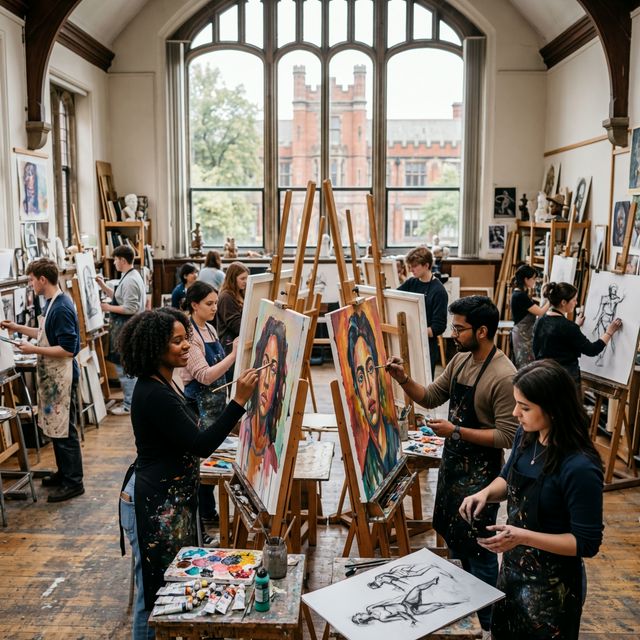
Fine art education is concerned with developing artists who can think as well as make, who understand the histories and contexts of visual practice, and who can articulate what they are doing and why. The discipline encompasses painting, sculpture, drawing, printmaking, photography, video, installation, and performance, along with the critical and theoretical frameworks that help artists and audiences make sense of contemporary and historical practice. A fine art degree is not a course in technical skills alone: it is an education in how to develop and sustain an independent creative practice, how to engage seriously with art's ideas, and how to situate your own work within the broader landscape of visual culture. At the University of Newcastle, the four-year fine art programme includes both a sandwich year and a year abroad, as well as a work placement, giving you an unusually rich range of opportunities to develop your practice in professional and international contexts. Studio work sits at the heart of the programme, supported by art history and critical theory modules that deepen your understanding of the movements, debates, and practitioners that have shaped contemporary art. You will build a portfolio of work across the four years, developing your individual voice through sustained experimentation and critical reflection. The sandwich year and work placement give you direct experience of working in a professional context, whether in a gallery, studio, arts organisation, or creative industry, and the year abroad broadens your artistic frame of reference considerably. Graduates in fine art go on to a wide variety of careers. Working as a practising artist is the most direct path, and Newcastle's strong links with the professional art world in the North East and beyond support this. Gallery and museum work, art education at all levels, arts administration and curatorship, and roles in arts funding and commissioning are common destinations. Many graduates also enter the broader creative industries, including design, illustration, film, and digital media, where the visual and conceptual skills developed during the degree are directly applicable. Postgraduate study at masters level, including MFA programmes, is a frequent route for those who want to develop their practice further within an academic setting.
Syllabus & Modules
Typical curriculumStudent Satisfaction
National Student Survey - 50 respondents (86% response rate)
Similarly Ranked Alternatives


What comes next? 🎓
Choosing the right university starts with choosing the right school. Explore transparent, data-driven school profiles powered by official DfE statistics.
Explore Schools on WhatSchool.ai →