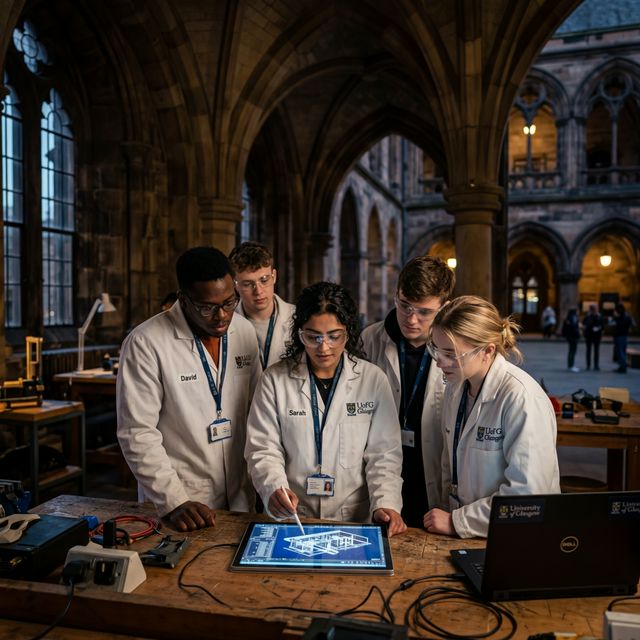
MA Gaelic/Celtic Civilisation
About this course
Scottish Gaelic and Celtic civilisation opens a window onto one of Europe's oldest living language traditions and the cultures it has shaped across Scotland, Ireland and the wider Celtic world. Gaelic is not simply a historical curiosity; it is a living language with a contemporary literary tradition, a community of speakers, and growing relevance in areas from broadcasting and education to cultural heritage and tourism. Celtic civilisation encompasses the history, literature, mythology, art and social structures of the peoples who spoke Celtic languages, from ancient Gaul to medieval Ireland and Scotland, offering a perspective on European culture that differs markedly from the classical traditions that dominate most humanities study. At the University of Glasgow, one of the few universities in the world with a substantial tradition of Celtic studies, you will study on a part-time basis, including a year abroad that deepens your engagement with Gaelic-speaking communities and broader Celtic cultures. You will develop Gaelic language skills for use in contemporary professional and community contexts, while also exploring Gaelic and Celtic history, literature and culture through the centuries. The course is taught bilingually, reflecting the programme's commitment to living Gaelic as a working language rather than merely a subject of study. Graduates with expertise in Gaelic and Celtic studies find roles in Gaelic-medium education, broadcasting with organisations such as MG Alba, heritage and cultural organisations, community development, tourism and arts administration. The language skills are valued by local authorities with Gaelic responsibilities, by organisations involved in minority language policy, and by heritage bodies with remits covering Scottish or Irish cultural heritage. Many graduates also pursue postgraduate study in Celtic languages and literatures, Scottish history or cultural heritage management, contributing to the ongoing scholarship that sustains these traditions.
Syllabus & Modules
Typical curriculumStudent Satisfaction
Missing Satisfaction Data
The university has not shared complete student satisfaction records for this specific degree metrics block. You may want to formally explore these topics with the university staff at an open day before committing.
What comes next? 🎓
Choosing the right university starts with choosing the right school. Explore transparent, data-driven school profiles powered by official DfE statistics.
Explore Schools on WhatSchool.ai →