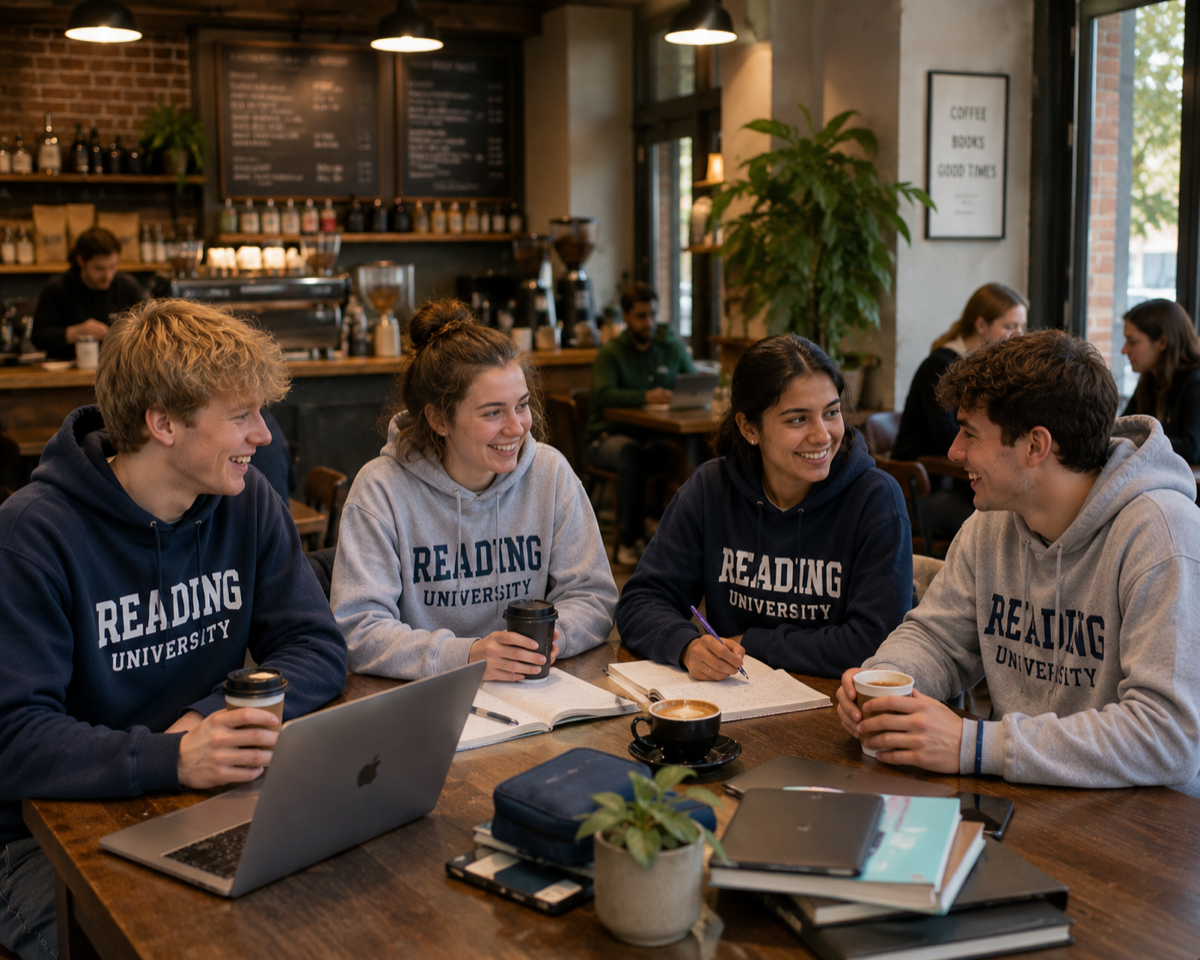
BSc Geography (Human)
About this course
Human geography examines the complex relationships between people and places, asking how societies organise themselves in space, how economic and political forces shape landscapes and communities, and how cultural diversity is expressed across different parts of the world. It is a discipline that bridges the social sciences, drawing on sociology, economics, political science, and anthropology alongside the distinctive spatial thinking that is geography's own contribution, and it develops both quantitative and qualitative research skills. At the University of Reading, this three-year full-time programme invites you to study the dynamics and differences in cultures, political systems, economies, and landscapes, and to discover the links between them. You will explore urban and rural geographies, international migration and diaspora, postcolonial and global south studies, economic globalisation, social inequality, and the cultural dimensions of place and identity. Fieldwork is central to geographical education, and you will develop skills in ethnographic observation, interview, mapping, data analysis, and the interpretation of spatial patterns. The course includes a sandwich year, a year abroad, and work placement, giving you professional and international experience that connects your academic learning to real-world geographical questions. Graduates from human geography programmes work in urban planning, international development, the civil service, NGOs, community organisations, education, environmental management, market research, and the public sector. The combination of spatial analysis, cultural awareness, and research skills that human geography develops is genuinely versatile. Further study at postgraduate level in human geography, development studies, urban planning, or social research is available for those who wish to develop specialist expertise or pursue research careers.
Syllabus & Modules
Typical curriculumStudent Satisfaction
National Student Survey - 15 respondents (62% response rate)
Similarly Ranked Alternatives



What comes next? 🎓
Choosing the right university starts with choosing the right school. Explore transparent, data-driven school profiles powered by official DfE statistics.
Explore Schools on WhatSchool.ai →