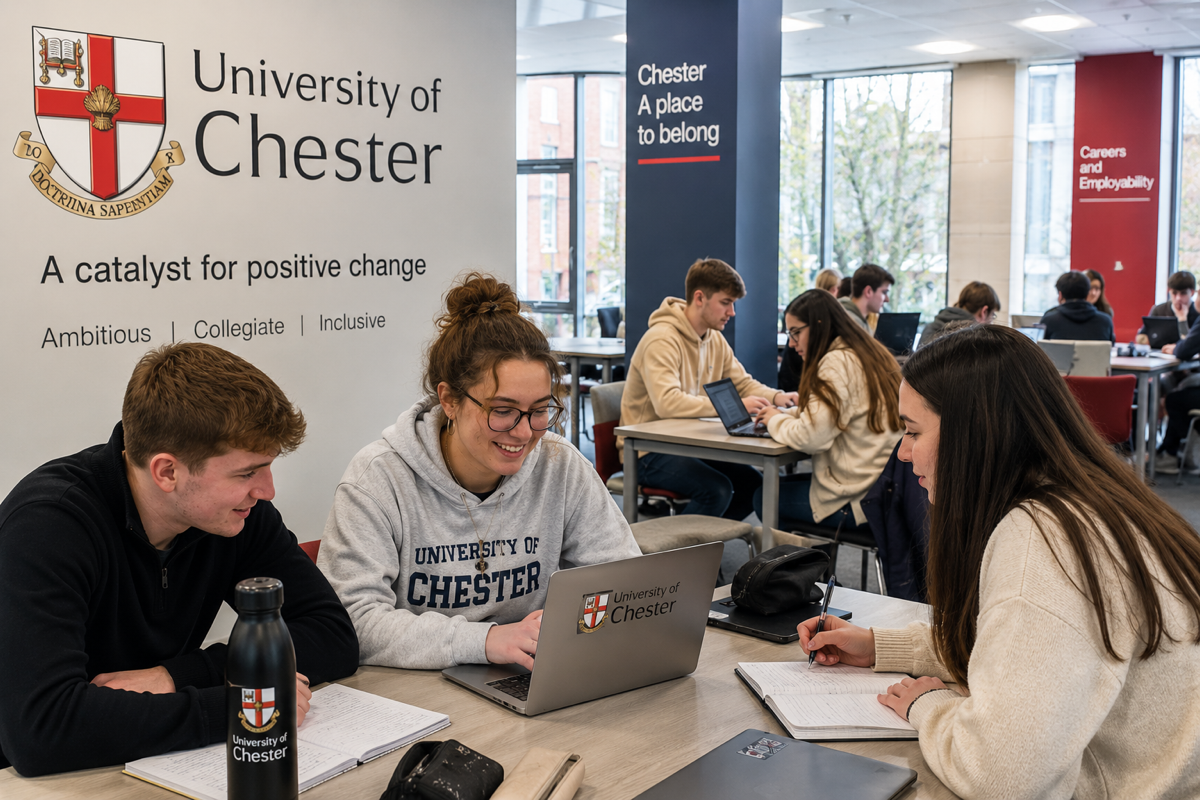
BA Graphic Design (including Foundation Year)
About this course
Graphic design is the practice of visual communication, using typography, imagery, colour, layout and visual hierarchy to convey meaning, direct attention and create aesthetic experiences across print, screen and environmental contexts. It is a discipline that combines technical craft, creative thinking and strategic understanding of audience and communication goals, and it underpins virtually every visual communication that organisations produce, from brand identities and packaging to websites, publications, wayfinding systems and motion graphics. The digital revolution has expanded the range of contexts in which graphic designers work while also raising the technical bar for the discipline. The University of Chester offers this programme over four years full time, incorporating a foundation year that provides a supported first year for students developing their creative and technical skills before progressing into the full degree. The programme also includes a year abroad, giving you the opportunity to study design in an international context and encounter different visual traditions and design cultures. The typical entry tariff for this programme is around 120 UCAS points. You will develop skills across analogue and digital design practice, including typography, image-making, publication design, brand identity, screen-based design and motion graphics. The programme develops your ability to think conceptually about communication problems, to research audiences and contexts, to generate and refine ideas, and to produce work to a standard appropriate for professional presentation. Studio critique and peer review are central to the learning environment, developing your ability to articulate and defend design decisions. Graduates of graphic design programmes work as graphic designers and visual communication specialists in design agencies, in-house design teams within companies and public sector organisations, advertising agencies, publishing houses, cultural institutions, broadcast media and digital product teams. Many graduates also work as freelance designers, building a portfolio career across multiple clients and contexts. Specialisations include brand identity, editorial design, motion graphics, UX design, illustration and art direction. Postgraduate study in graphic design, communication design, interaction design or visual culture is available for those who wish to develop a specialist practice or research career.
Syllabus & Modules
Typical curriculumStudent Satisfaction
National Student Survey - 50 respondents (67% response rate)
Similarly Ranked Alternatives

What comes next? 🎓
Choosing the right university starts with choosing the right school. Explore transparent, data-driven school profiles powered by official DfE statistics.
Explore Schools on WhatSchool.ai →