High Drop-out Rate Alert
25% of students drop out or transfer from this specific course. Consider asking why on an open day.
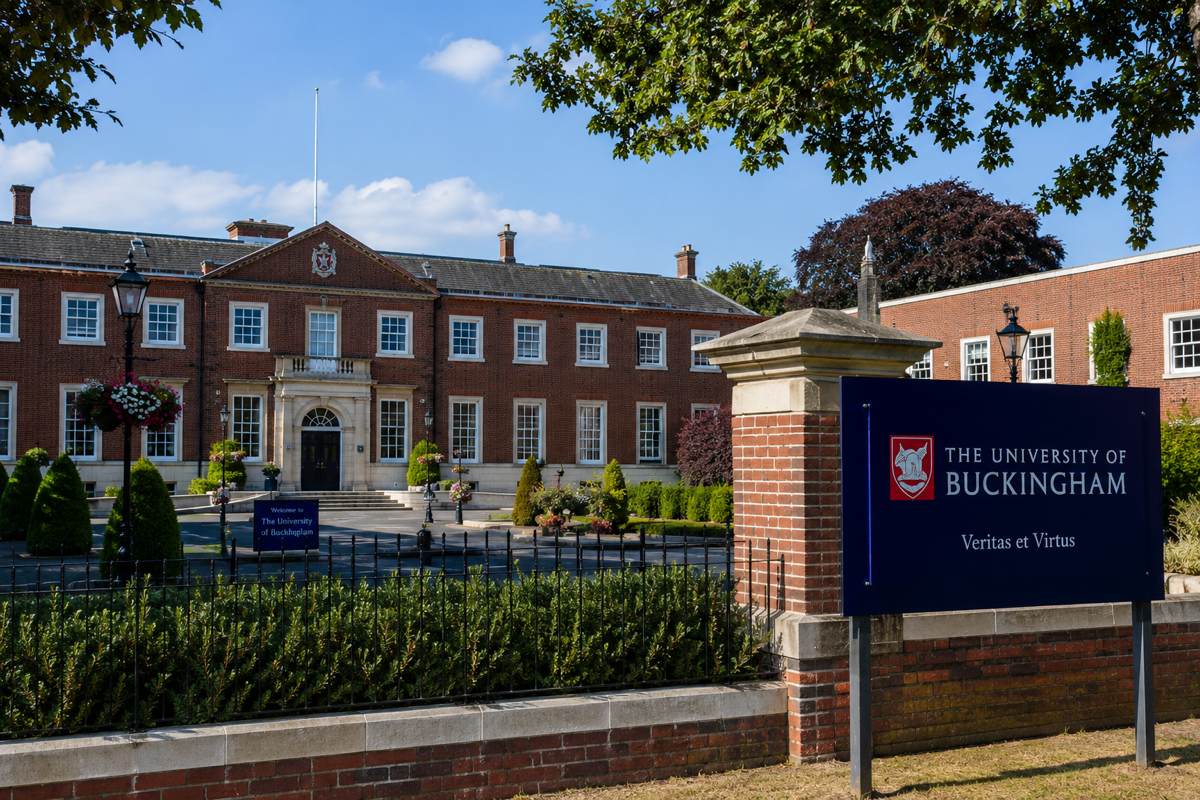
BA History with Economics (2-year degree)
About this course
History with economics is a pairing that brings together the study of the human past with the discipline best equipped to explain the material forces that have shaped it. History develops the skills of critical reading, argument from evidence and contextual understanding that allow us to make sense of how the present came to be. Economics provides analytical tools for understanding how resources are allocated, how markets function, how incentives shape behaviour and how wealth and poverty are distributed across societies. Studied together, the two disciplines illuminate each other: economic history becomes more rigorous with formal models, and economic theory becomes more grounded when tested against the actual record of human behaviour across time. At the University of Buckingham this is a two-year degree, a genuinely accelerated programme that covers the equivalent of a traditional three-year course through intensive year-round study. This is an unusual structure that suits students who want to complete their degree efficiently without sacrificing intellectual depth. You will develop historical thinking and a historical perspective on the contemporary world, acquiring the skills to work under pressure, construct coherent arguments and deploy evidence effectively. The economics component adds quantitative and analytical tools that complement the humanistic skills of historical study. History and economics graduates are sought after in finance, banking, public policy, journalism, the civil service, business and consulting, precisely because the combination of analytical rigour and contextual understanding is relatively rare. Many graduates enter graduate schemes in financial services or management consultancy, where the ability to understand both quantitative data and complex historical context is valued. Others move into journalism, policy research, public affairs or the charitable sector. Postgraduate study in economic history, economics, history, public policy or business is a common route for graduates who want to develop specialist expertise.
Syllabus & Modules
Typical curriculumStudent Satisfaction
National Student Survey - 20 respondents (54% response rate)
Similarly Ranked Alternatives



What comes next? 🎓
Choosing the right university starts with choosing the right school. Explore transparent, data-driven school profiles powered by official DfE statistics.
Explore Schools on WhatSchool.ai →