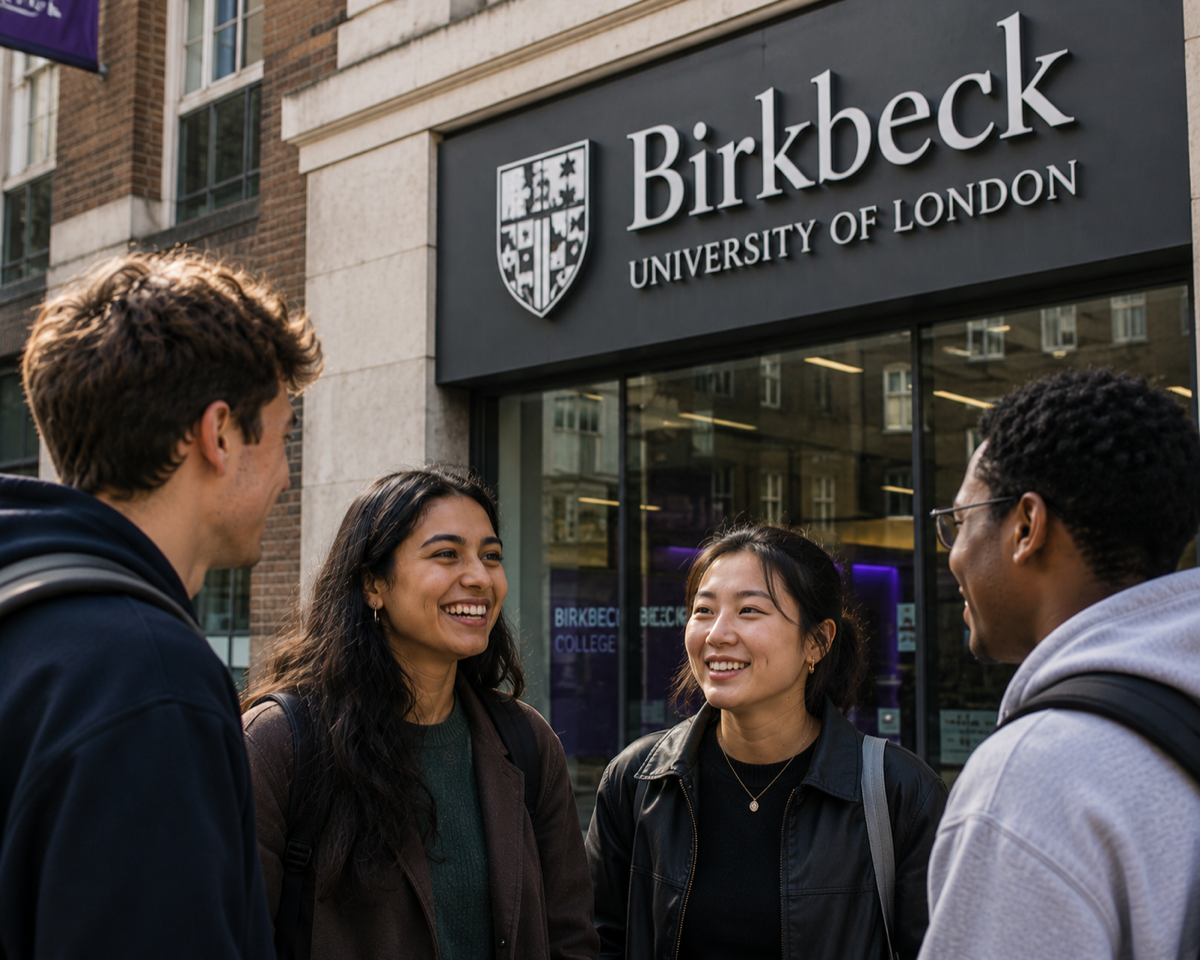
BA Journalism and Language (French, German, Italian, Japanese, Spanish)
About this course
Journalism and language study make a particularly compelling combination. Journalism equips you with the practical and critical skills to report, investigate, write and produce media content across platforms, while language study opens the ability to work across cultural and national boundaries and to engage with sources, stories and audiences that a monolingual journalist cannot reach. Together they prepare you for work in a media environment that is genuinely international and in which linguistic competence is an increasingly rare and valuable asset. At Birkbeck College, part of the University of London, this programme is delivered part-time, making it accessible to students who are working, caring for others or managing other commitments alongside their studies. Birkbeck's part-time model is deliberately designed for people who need to study flexibly, and the evening teaching structure allows you to be a student without having to put the rest of your life on hold. You will be able to choose your language from French, German, Italian, Japanese or Spanish, each of which opens a distinct set of international contexts and career possibilities. The journalism strand develops your skills in news writing, reporting, feature writing, digital and multimedia production, and media law and ethics. You will learn to find and verify stories, to work to deadlines, and to understand the changing landscape of media including print, broadcast and online. The language strand develops your proficiency in your chosen language alongside an understanding of the cultural and social contexts in which that language operates. As the current course description notes, the combination is aimed at aspiring journalists who want to work in international contexts and to engage with the world in more than one language. Graduates pursue careers as journalists, reporters, editors, content producers and media professionals in the UK and internationally. The language specialism opens additional paths in foreign correspondence, international broadcasting, translation, public relations for multinational organisations, and roles in diplomatic and intergovernmental media relations. Some graduates go on to postgraduate journalism qualifications or to further academic study in media studies or linguistics.
Syllabus & Modules
Typical curriculumStudent Satisfaction
National Student Survey - 10 respondents (87% response rate)
What comes next? 🎓
Choosing the right university starts with choosing the right school. Explore transparent, data-driven school profiles powered by official DfE statistics.
Explore Schools on WhatSchool.ai →