
High Drop-out Rate Alert
21% of students drop out or transfer from this specific course. Consider asking why on an open day.
BSc Life Sciences
About this course
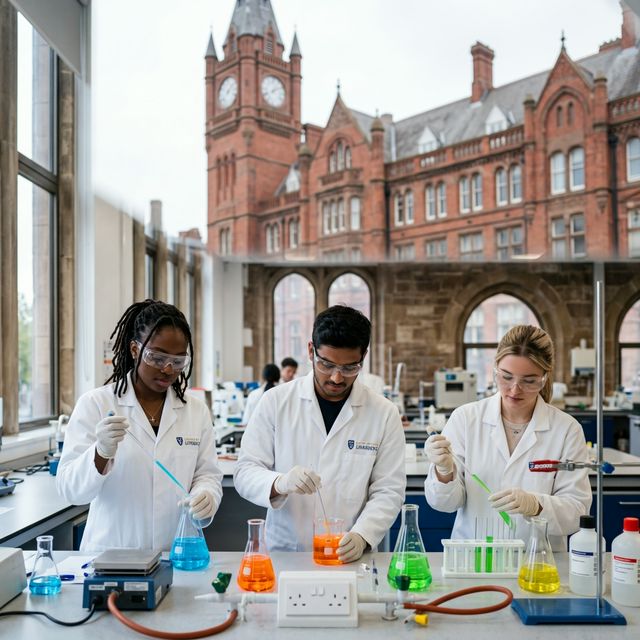
Life Sciences is a broad and integrative discipline that encompasses the study of living organisms across all scales, from the molecular processes inside a single cell to the ecology of entire biospheres. It sits at the meeting point of biology, biochemistry, genetics, and physiology, and its applications run from drug discovery and medical diagnostics to environmental conservation and agricultural innovation. The breadth of the field is one of its great strengths: it equips graduates to contribute across many different industries and research areas. At the University of Manchester, a leading research-intensive university with exceptional strength in the biomedical and life sciences, this programme is available with a foundation year for students who need to develop their scientific preparation before entering the main degree. The foundation year builds the biological, chemical, and mathematical foundations required for degree-level study, and the transition into the main programme is carefully supported. You will then study cell biology, molecular genetics, physiology, microbiology, and ecology, with laboratory and project work central throughout. Manchester's research environment means you study in a context where cutting-edge science is being produced around you. Life Sciences graduates from Manchester have strong career prospects across a range of sectors. Pharmaceutical and biotechnology companies, the NHS and public health bodies, environmental agencies, agricultural research organisations, and academic institutions are all significant employers. Roles in research and development, clinical science, quality assurance, regulatory affairs, and environmental management are common starting points. Teaching and science communication are further paths. Many graduates pursue postgraduate study to specialise in a particular area, whether a Masters in bioinformatics, a PhD in molecular biology, or a graduate-entry medical programme. The foundation year makes the degree accessible to students who arrive with strong motivation but need additional scientific grounding.
Syllabus & Modules
Typical curriculumStudent Satisfaction
National Student Survey - 205 respondents (80% response rate)
Similarly Ranked Alternatives



What comes next? 🎓
Choosing the right university starts with choosing the right school. Explore transparent, data-driven school profiles powered by official DfE statistics.
Explore Schools on WhatSchool.ai →