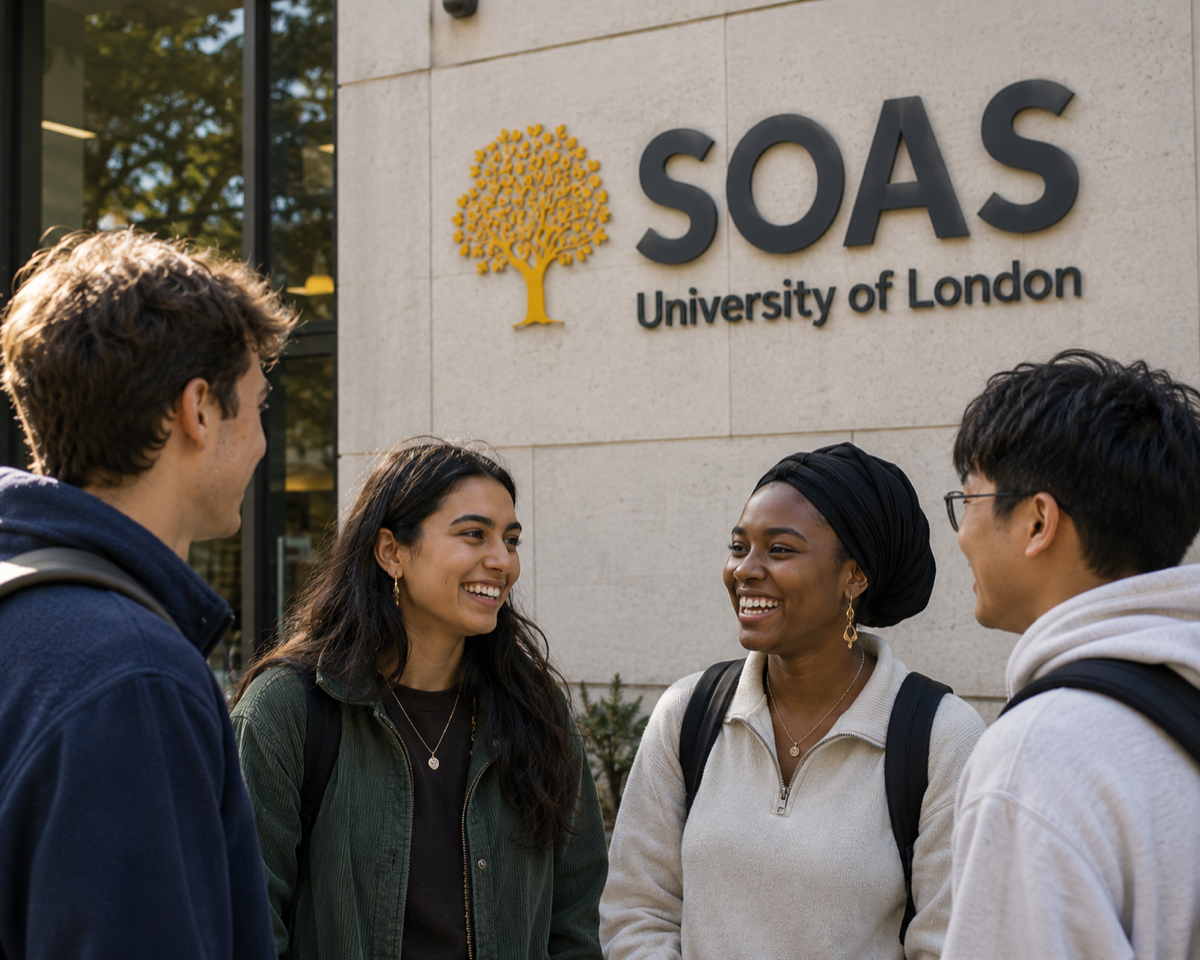
BA Linguistics and Politics
About this course
Linguistics and politics is a genuinely distinctive combination that connects the scientific study of language with the analysis of power, governance, and political life. Language and politics are inseparable in practice: political discourse is constructed through choices about vocabulary, framing, and rhetorical strategy; laws are made and interpreted through texts; international relations depend on translation and cross-cultural communication; and questions about language policy, such as which languages are given official status and what rights speakers of minority languages have, are themselves fundamentally political. Studying both disciplines together gives you conceptual tools to understand these connections at depth. At the School of Oriental and African Studies in London, this programme includes a foundation year, which provides additional academic preparation before the main degree begins. SOAS is one of the world's leading centres for the study of Asia, Africa, and the Middle East, and the combination of linguistics and politics at SOAS has a particular strength in languages and political systems outside the European mainstream. You will study the structures and systems of human language, including phonology, grammar, semantics, pragmatics, and sociolinguistics, alongside the political institutions, ideologies, and processes that shape governance and international affairs. The combination of linguistic and political analysis is especially powerful for understanding the politics of multilingual societies, language rights, and the role of communication in diplomacy and conflict. Graduates of linguistics and politics programmes work in diplomacy, international organisations, language policy, journalism, translation, education, and research. The combination of technical linguistic knowledge and political understanding is valuable in any professional context where language and power intersect. Postgraduate study in linguistics, political science, or area studies is a natural further step.
Syllabus & Modules
Typical curriculumStudent Satisfaction
National Student Survey - 170 respondents (64% response rate)
Similarly Ranked Alternatives



What comes next? 🎓
Choosing the right university starts with choosing the right school. Explore transparent, data-driven school profiles powered by official DfE statistics.
Explore Schools on WhatSchool.ai →