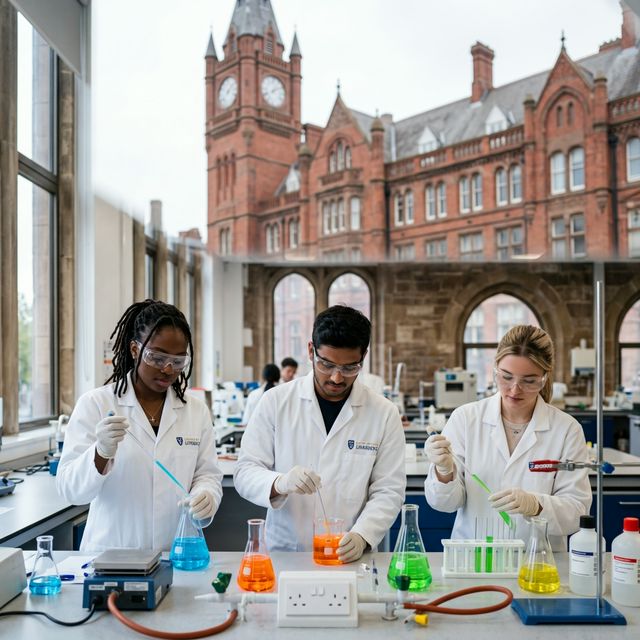
BSc Marine Biology
About this course
Marine biology is the study of life in the world's oceans and coastal waters, encompassing organisms from microscopic phytoplankton and bacteria to whales and the great reef ecosystems that support thousands of species. The marine environment is the largest and least well-understood biosphere on Earth, and it plays a central role in regulating the planet's climate, producing oxygen, cycling nutrients and supporting the food chains on which much of humanity depends. Marine biology addresses this world through the methods of ecology, evolutionary biology, physiology, behaviour and molecular science, developing a deep understanding of how marine organisms live, interact and respond to the changes being brought about by warming and acidification. At the University of Liverpool you will study the biology of marine organisms and the ecology of marine systems, from intertidal zones and kelp forests to deep-sea communities and open-ocean ecosystems. You will develop both laboratory and fieldwork skills, with access to the marine environments of the Irish Sea and beyond. The programme includes a sandwich year, providing a full year of professional experience in a research, conservation or environmental organisation, as well as a year abroad that allows you to study marine ecosystems in a different geographic context. Work placement is also built into the programme, ensuring that you develop professional skills alongside scientific knowledge. Marine biology graduates go on to work in marine conservation, fisheries management, environmental consultancy, oceanographic research, government agencies and international environmental bodies. Some pursue careers in science communication, education or documentary and journalism work relating to the ocean. Others move into biotechnology, drawing on the biological diversity of the marine world. Many continue to postgraduate study in marine biology, oceanography, conservation science or environmental management. As the health of the world's oceans becomes ever more urgent, the expertise this degree develops is increasingly consequential.
Syllabus & Modules
Typical curriculumStudent Satisfaction
National Student Survey - 10 respondents (73% response rate)
Similarly Ranked Alternatives




What comes next? 🎓
Choosing the right university starts with choosing the right school. Explore transparent, data-driven school profiles powered by official DfE statistics.
Explore Schools on WhatSchool.ai →