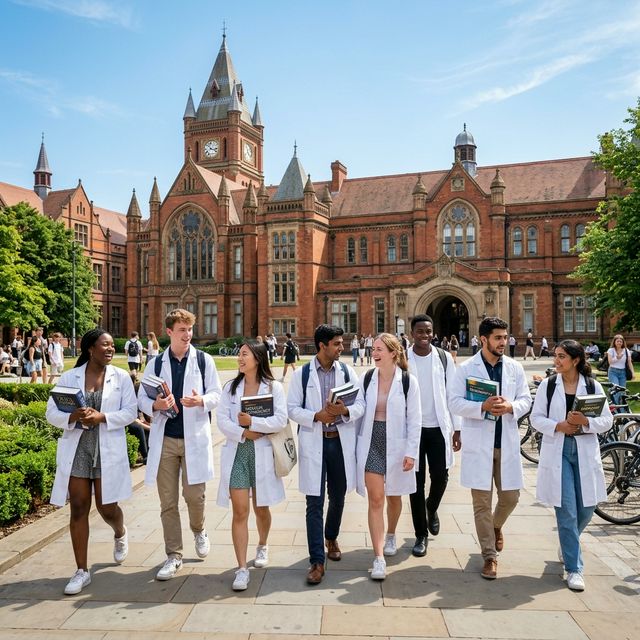
BSc Medical Physiology
About this course
Medical physiology is the science of how the body works, examining the functions of organs, systems and cells in health and investigating what happens when those functions go wrong in disease. It is a rigorous biomedical science that draws on chemistry, physics and mathematics as well as biology, providing the mechanistic foundations on which clinical medicine is built. Understanding the cardiovascular system, the kidney, the nervous system, hormonal regulation, muscle function and respiration at both the cellular and the whole-body level is what medical physiology is fundamentally about, and it is knowledge that underpins a very wide range of health and life science careers. The University of Manchester offers this three-year full-time programme with an integrated foundation year, extending the overall duration and providing students who need additional scientific preparation with a supported route into the degree. The foundation year builds the mathematical and scientific skills needed to engage fully with the rigorous content of the physiology degree. Manchester's biomedical sciences are underpinned by a world-class research environment and strong connections to the NHS trusts that surround it. The typical entry tariff for this programme is around 152 UCAS points. Throughout the programme you will move from core biochemistry, cell biology and anatomy into advanced physiology, covering topics such as cardiac electrophysiology, renal fluid balance, respiratory mechanics and neuroendocrinology. Laboratory work and data analysis are central to the programme, developing your practical skills alongside your theoretical understanding. You will learn to read and evaluate scientific literature critically, which is an essential skill for careers in research, healthcare and the life science industries. Graduates of medical physiology programmes go on to work in physiological measurement and clinical physiology departments within the NHS, postgraduate medicine and dentistry, pharmaceutical research and development, clinical trials, sports and exercise physiology, and science education. Many graduates pursue postgraduate research in physiology, neuroscience, pharmacology or related biomedical fields. The analytical and laboratory skills developed during the degree are also valued in biotechnology, medical devices and regulatory affairs roles within the life sciences sector.
Syllabus & Modules
Typical curriculumStudent Satisfaction
National Student Survey - 10 respondents (92% response rate)
Similarly Ranked Alternatives




What comes next? 🎓
Choosing the right university starts with choosing the right school. Explore transparent, data-driven school profiles powered by official DfE statistics.
Explore Schools on WhatSchool.ai →