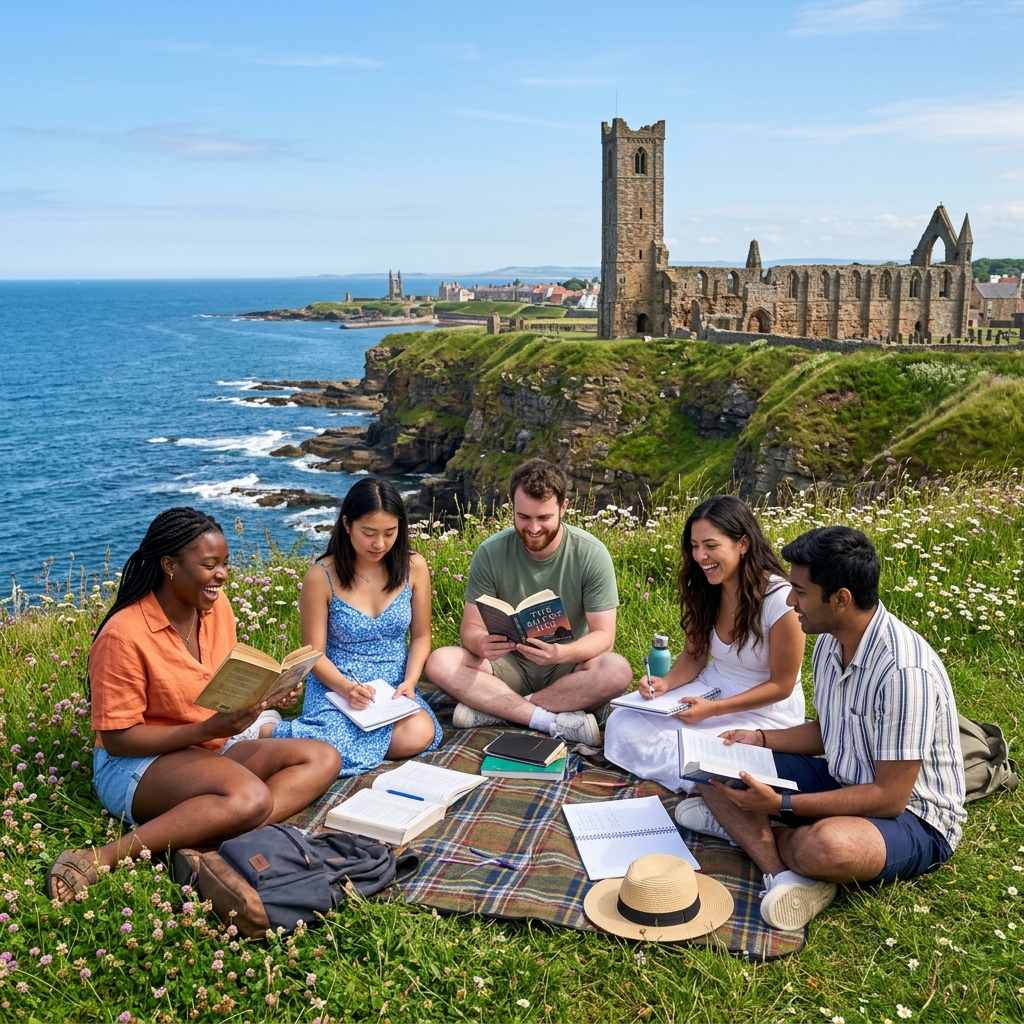
MA Modern Languages (Italian and Russian) and English
About this course
Italian, Russian and English is a triple language combination of exceptional intellectual richness, spanning three of the world's major literary and cultural traditions. Italian carries one of Europe's greatest literary heritages, from Dante and Petrarch through to the modernism of Calvino and Morante, alongside a contemporary culture of global influence in design, fashion, food and film. Russian encompasses one of the world's most powerful literary traditions, from Tolstoy and Dostoevsky to the complex cultural productions of the Soviet period and contemporary Russia, alongside a political and historical significance that makes understanding Russia's language and culture essential for anyone engaged with European and global affairs. English literature, studied in depth, completes a formation of extraordinary range. At the University of St Andrews you will develop language proficiency in Italian and Russian to a high level alongside deep engagement with their associated literatures, cultures, histories, politics and film. You will study English as a separate strand, developing the analytical and critical skills characteristic of English literary study. The programme runs over four years full time, reflecting the Scottish honours degree structure, and includes a year abroad, which is essential for language learning at this level and which you will spend in an Italian or Russian-speaking environment. You will develop advanced multilingual communication skills alongside literary and cultural analysis, historical contextualisation and extended academic writing in multiple languages. The combination of three major European languages and their cultural traditions is a genuinely rare and powerful intellectual formation. Graduates from triple language programmes pursue careers in translation, diplomacy, international business, journalism, education, the civil service, cultural organisations and research. Postgraduate study in any of the three languages, literary studies, translation or comparative literature is also a natural route.
Syllabus & Modules
Typical curriculumStudent Satisfaction
National Student Survey - 85 respondents (58% response rate)
Similarly Ranked Alternatives

What comes next? 🎓
Choosing the right university starts with choosing the right school. Explore transparent, data-driven school profiles powered by official DfE statistics.
Explore Schools on WhatSchool.ai →