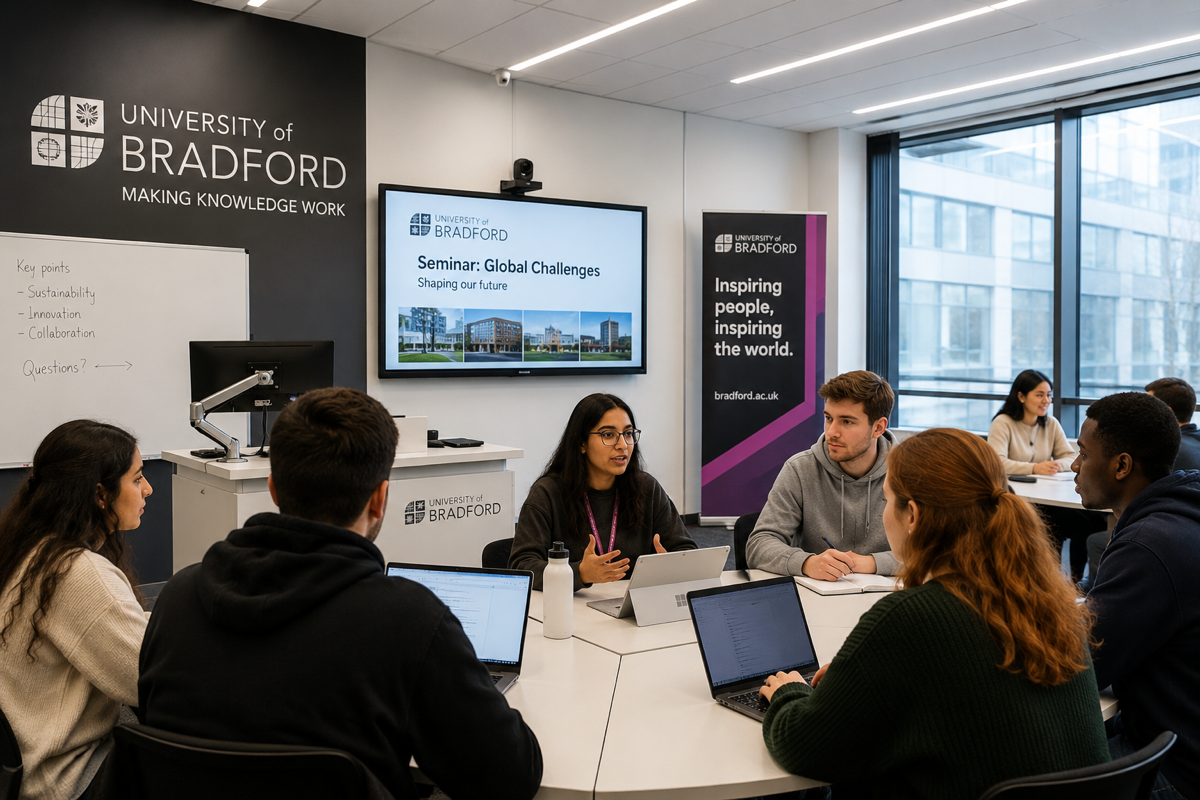
BSc Occupational Therapy
About this course
Occupational Therapy is a health profession built on the principle that meaningful activity is fundamental to human wellbeing. Occupational therapists work with people who are experiencing difficulties with everyday activities as a result of illness, injury, disability, or the challenges of ageing, helping them to regain independence, adapt their environments, and participate in the roles and routines that give their lives purpose. The profession operates across a wide range of settings, including hospitals, community services, schools, workplaces, and mental health services, and draws on a combination of clinical knowledge, creative problem-solving, and person-centred practice. At the University of Bradford, this three-year, full-time degree includes a foundation year, offering a supported route into the programme for students who would benefit from additional preparation before entering the professional training. You will develop both the theoretical understanding and the practical competence required to work effectively as a qualified occupational therapist, building knowledge of human occupation, health sciences, and the social factors that shape people's ability to engage in daily life. Clinical placements form a core part of the programme, giving you supervised experience working directly with service users in real healthcare and community settings. Graduation leads to eligibility for registration with the Health and Care Professions Council, permitting practice as a qualified occupational therapist. Graduates work across the NHS, local authority social care, the independent sector, charities, and increasingly in schools and workplaces. The profession offers a high degree of direct client impact, and many practitioners go on to develop specialist expertise in areas such as mental health, paediatrics, neurological rehabilitation, or vocational rehabilitation. Postgraduate study and continuing professional development are strongly supported within the profession, opening routes to advanced practice, management, education, and research.
Syllabus & Modules
Typical curriculumStudent Satisfaction
National Student Survey - 25 respondents (62% response rate)
Similarly Ranked Alternatives

What comes next? 🎓
Choosing the right university starts with choosing the right school. Explore transparent, data-driven school profiles powered by official DfE statistics.
Explore Schools on WhatSchool.ai →