MA Persian and Russian and Spanish
About this course
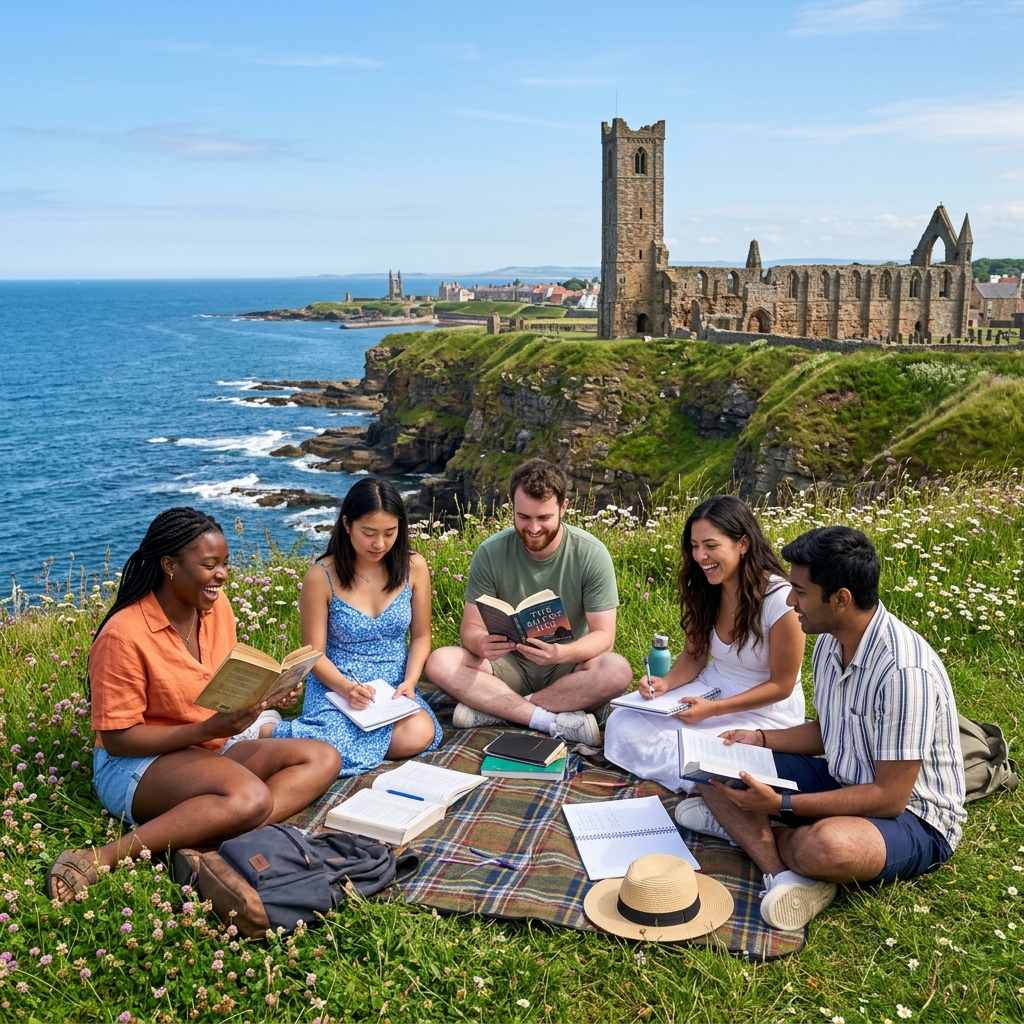
Persian, Russian and Spanish is an exceptional combination of three major world languages, each with a distinct cultural tradition and contemporary geopolitical significance, and together spanning a remarkable breadth of the world's population and political geography. Persian is the language of Iran, Afghanistan and parts of Central Asia, and the vehicle of one of the world's great classical literary traditions alongside its modern strategic importance. Russian is the most widely spoken Slavic language, the language of a rich literary tradition from Pushkin and Tolstoy through to the Soviet period and beyond, and a language of enduring geopolitical consequence. Spanish connects you to more than twenty countries across Europe and the Americas. At St Andrews, this four-year MA programme develops genuine proficiency across all three languages alongside deep engagement with their respective literatures, cultures and contemporary contexts. A year abroad is built into the programme, giving you immersive experience in at least one of your language communities. St Andrews offers Persian in combination precisely because the university recognises the value of studying this language alongside others, and the department's expertise in modern languages and linguistics provides an excellent scholarly home for a triple combination of this ambition. The intellectual demands of developing proficiency in three quite different languages simultaneously are significant, and graduates of this programme are distinguished by a depth of cultural range that very few other degrees can match. Graduates move into diplomacy, the foreign service, intelligence, international journalism, translation and interpreting, international law, area studies research, international organisations and academia. The combination of Persian, Russian and Spanish gives access to a set of languages and regions that is particularly relevant to careers at the intersection of global security, energy, development and diplomacy.
Syllabus & Modules
Typical curriculumStudent Satisfaction
National Student Survey - 25 respondents (63% response rate)
Similarly Ranked Alternatives


What comes next? 🎓
Choosing the right university starts with choosing the right school. Explore transparent, data-driven school profiles powered by official DfE statistics.
Explore Schools on WhatSchool.ai →