High Drop-out Rate Alert
18% of students drop out or transfer from this specific course. Consider asking why on an open day.
BA Politics and International Relations
About this course
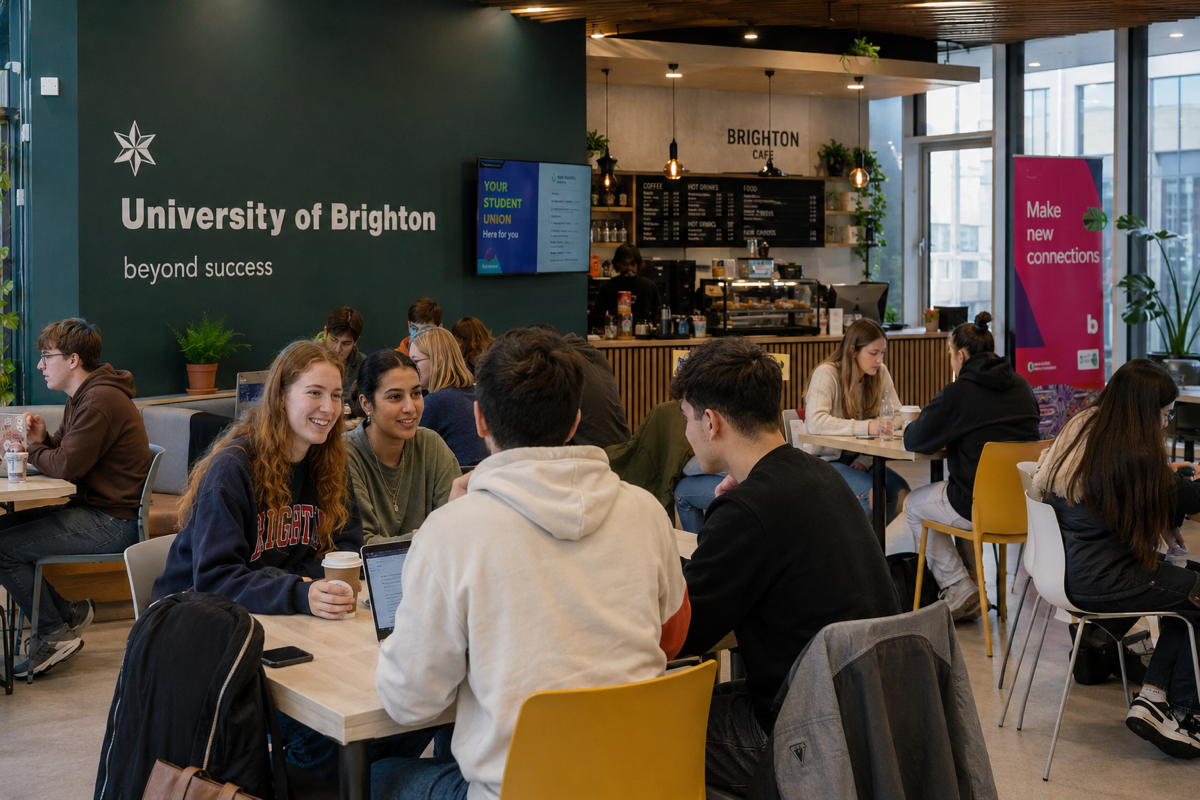
Politics and international relations together examine how power is organised, exercised, and contested within and between states. Politics addresses the structures and processes of government, the nature of democracy and its alternatives, the role of political parties and social movements, and the ideological frameworks through which people understand and debate public life. International relations extends this to the global level, asking how states and other actors interact across borders, how international order is maintained and disrupted, what the basis of international law and justice might be, and how issues of security, trade, human rights, and climate change are governed globally. At the University of Brighton, this three-year, full-time programme includes a sandwich year and a work placement, giving you the opportunity to apply your developing analytical skills in a professional setting before your final year. The placement might be with a local authority, an NGO, a think tank, a media organisation, or a political campaign, and it provides practical experience that complements and grounds your academic study. Brighton's programme engages with both empirical and normative questions in politics and international relations, covering democratic theory, comparative politics, security studies, international political economy, environmental politics, and the analysis of specific foreign policy issues. A typical entry tariff of 104 UCAS points reflects the programme's accessibility. The degree develops your capacity to analyse complex political situations, to construct well-argued positions, and to communicate clearly in writing and speech. These skills are valuable across many professional contexts where understanding the public sphere matters. Graduates work in local and national government, the civil service, international organisations, the NGO sector, journalism, political consultancy, law, and business. The combination of political analysis and international knowledge is valued in a wide range of careers. Many graduates also pursue postgraduate study in politics, international relations, law, or public policy.
Syllabus & Modules
Typical curriculumStudent Satisfaction
National Student Survey - 70 respondents (81% response rate)
Similarly Ranked Alternatives

What comes next? 🎓
Choosing the right university starts with choosing the right school. Explore transparent, data-driven school profiles powered by official DfE statistics.
Explore Schools on WhatSchool.ai →