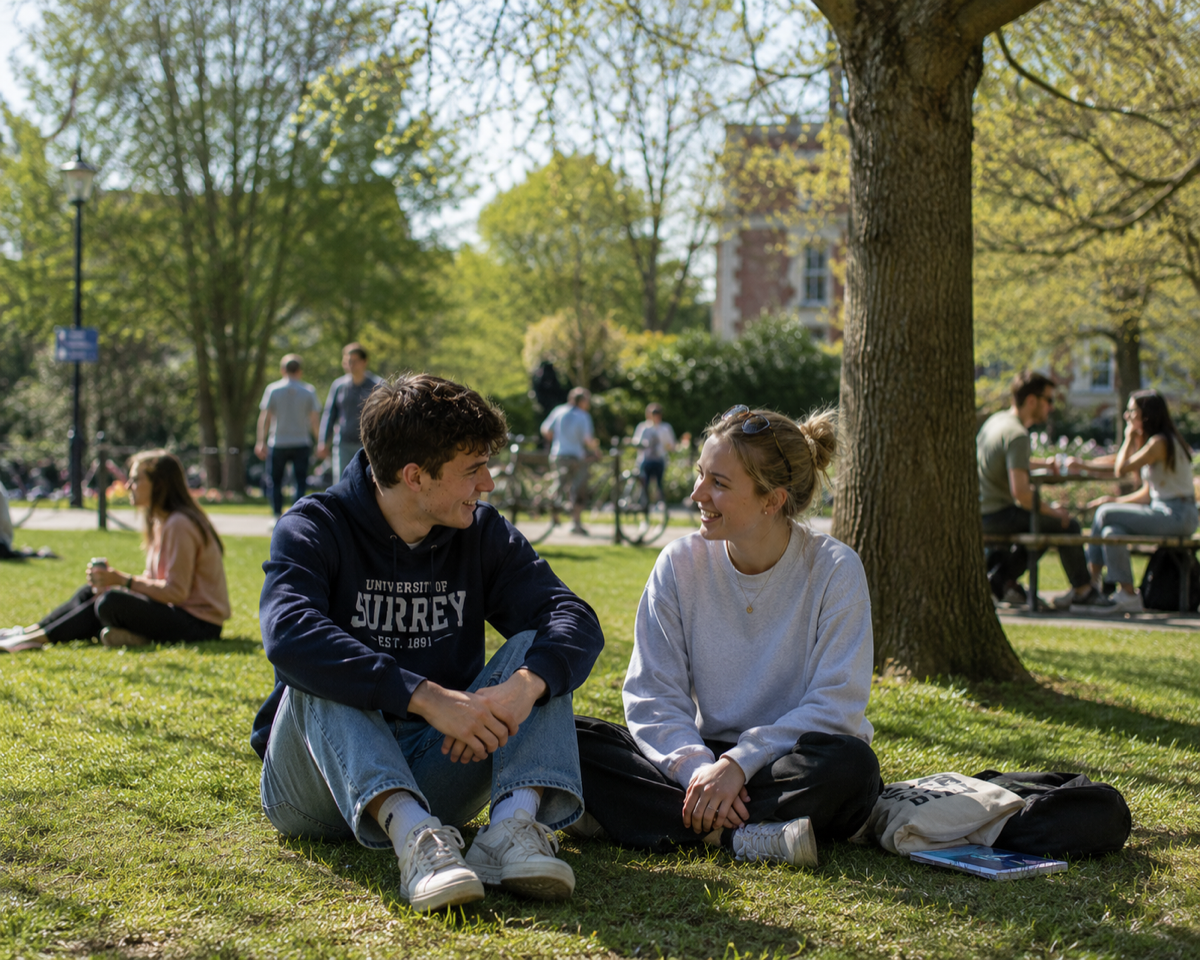
BSc Politics and Sociology
About this course
Politics and sociology examine power and society from complementary angles. Politics focuses on how authority is organised, contested and exercised, from party systems and voting behaviour to international relations and political theory. Sociology asks broader questions about how social structures, inequalities, identities and institutions shape the way we live. Together, the two disciplines give you a richer set of tools for understanding the world than either would on its own, and they are particularly well suited to a moment when the boundaries between political and social questions feel increasingly blurred. At the University of Surrey, this three-year full-time programme with a typical entry tariff of 120 UCAS points develops your ability to analyse political systems and social phenomena using both qualitative and quantitative methods. You will engage with political philosophy, comparative politics, sociology of culture, social inequality, research methods and contemporary policy debates. The programme reflects Surrey's commitment to preparing graduates for a changing workplace, including through the integration of digital and analytical skills that are increasingly valued by employers across public, private and third-sector organisations. Graduates from politics and sociology programmes go on to careers in a wide range of fields. Public policy, local and central government, think tanks, campaigning and advocacy organisations, journalism, social research, teaching, human resources, international development and the civil service are all common graduate destinations. The combination of analytical rigour and social awareness that these subjects develop is valued by employers who need people capable of understanding complex situations and communicating about them clearly. Many graduates pursue postgraduate study in politics, sociology, social policy, public administration or related fields. Others use the degree as a foundation for professional qualifications in law, social work or education.
Syllabus & Modules
Typical curriculumStudent Satisfaction
National Student Survey - 100 respondents (78% response rate)
Similarly Ranked Alternatives


What comes next? 🎓
Choosing the right university starts with choosing the right school. Explore transparent, data-driven school profiles powered by official DfE statistics.
Explore Schools on WhatSchool.ai →