BA Sociology
About this course
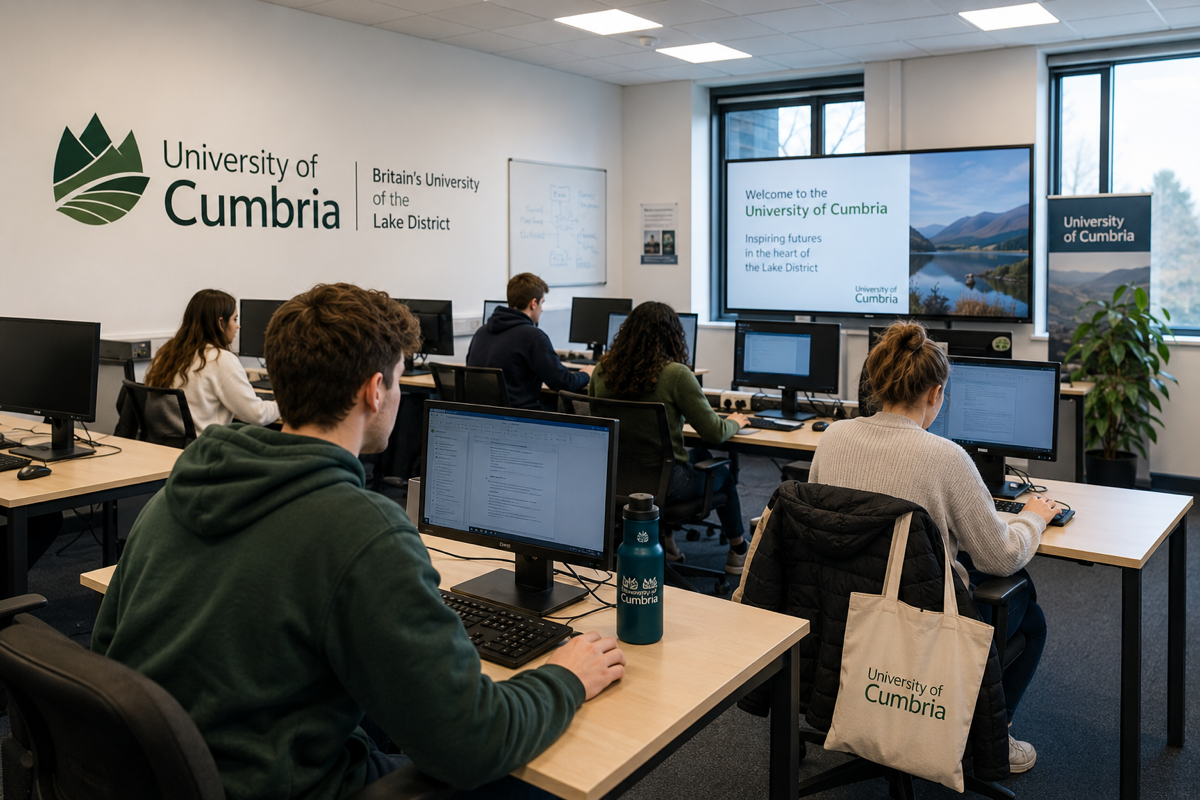
Sociology asks some of the most important questions in modern life: why do societies look the way they do, how do structures of power and inequality persist, and how can they be changed? It brings together rigorous empirical research with theoretical frameworks drawn from a long tradition of social thought to understand human actions, interactions, beliefs, values, and the institutions through which social life is organised. Sociology takes seriously the idea that the conditions of individual lives are shaped by forces larger than the individual, and it provides the tools to analyse those forces clearly. At the University of Cumbria, this three-year programme takes the region around Cumbria as a starting point for thinking about concepts at local, regional, and global levels, connecting abstract theory to lived social experience in a grounded and concrete way. You will examine how sociological theory and research interrelate with your own and others' experiences, developing the skills to analyse social phenomena from multiple perspectives. A core commitment runs through the programme to understanding and addressing epistemic injustice, rural and coastal deprivation, and intersectional disadvantage, giving the course a distinctive social justice orientation that is both intellectually serious and practically relevant. Sociology graduates develop analytical, research, and communication skills that are valued across a wide range of careers. Common destinations include social work, community development, housing, public policy, education, journalism, charity and voluntary sector roles, market research, and human resources. Many graduates go on to professional training in social work or related fields, while others pursue postgraduate study in sociology, social policy, criminology, or public health. The ability to understand and articulate how social structures shape individual lives is a capability that proves relevant in any field where human needs and institutions are in contact.
Syllabus & Modules
Typical curriculumStudent Satisfaction
National Student Survey - 20 respondents (81% response rate)
Similarly Ranked Alternatives


What comes next? 🎓
Choosing the right university starts with choosing the right school. Explore transparent, data-driven school profiles powered by official DfE statistics.
Explore Schools on WhatSchool.ai →