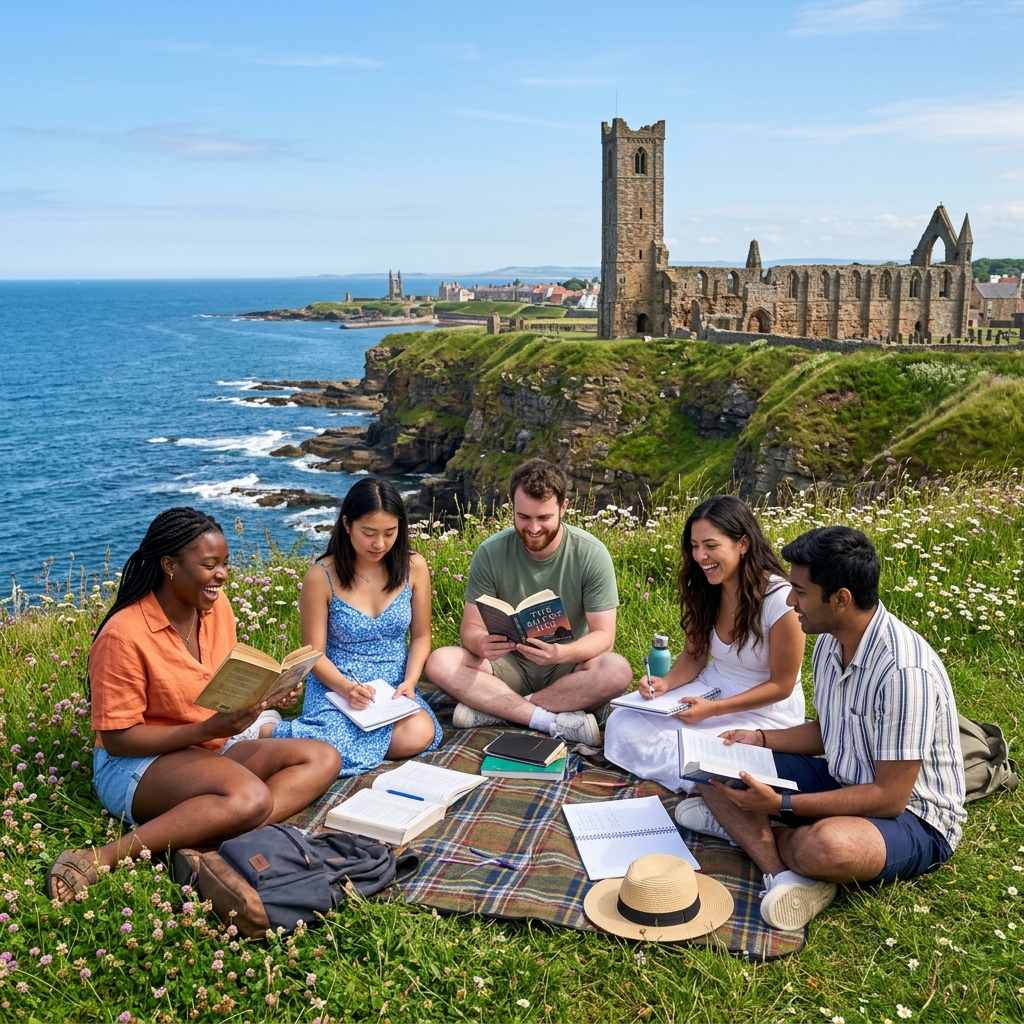
MA Ancient History and German
About this course
Ancient history and German is a pairing that might seem to bridge very different worlds, but the connection is more substantial than it first appears. Ancient history covers the civilisations of Greece and Rome and their neighbours from the eighth century BCE through to the fall of the western Roman empire in the fifth century CE, a period that stretches from the beginnings of Greek writing and urban life through to the classical age that shaped Western philosophy, literature, science, and political thought. German provides access to one of the richest traditions of ancient historical scholarship in the world: much of the foundational research in classical studies has been conducted in German, and access to it in the original language significantly deepens your engagement with the field. At St Andrews this four-year full-time programme includes a year abroad, essential for developing genuine proficiency in German and for experiencing the cultural and academic environment of a German-speaking country. The ancient history component at St Andrews covers the Mediterranean world from the Persian Gulf to the Clyde and from the Crimea to the Sahara, examining the Persians, Carthaginians, Hellenistic kingdoms, and the peoples at the edges of the Greek and Roman world alongside the central civilisations themselves. You will work with primary sources in translation, developing the skills of historical analysis, source criticism, and argument construction that the discipline demands. The German component develops practical linguistic proficiency alongside engagement with German literature, culture, and intellectual life. Graduates find careers in education, archival and museum work, heritage, journalism, the civil service, publishing, and academic research. The linguistic access to German academic scholarship is a genuine advantage for those pursuing postgraduate research in ancient history or classical studies. The analytical and research skills developed through both disciplines are broadly transferable and valued across law, policy, and consultancy. Many graduates also continue to postgraduate study in classical studies, ancient history, German, or related humanities fields.
Syllabus & Modules
Typical curriculumStudent Satisfaction
National Student Survey - 25 respondents (63% response rate)
Similarly Ranked Alternatives



What comes next? 🎓
Choosing the right university starts with choosing the right school. Explore transparent, data-driven school profiles powered by official DfE statistics.
Explore Schools on WhatSchool.ai →