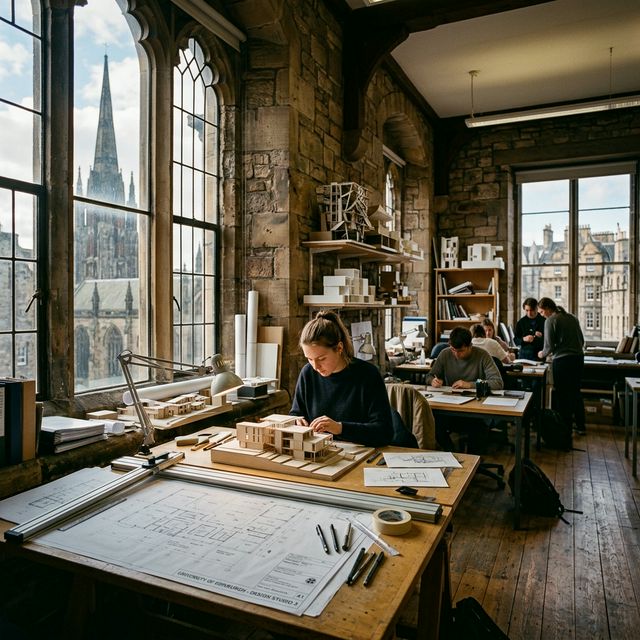
MA Architectural History and Heritage
About this course
Architectural history and heritage is a discipline concerned with understanding buildings and the built environment as historical documents, cultural expressions, and objects of ongoing social significance. It asks how and why buildings were designed and constructed as they were, how they have been used and altered over time, and what they mean to the communities and societies that inhabit and preserve them. The heritage dimension extends this inquiry into the questions of how societies choose which aspects of their built past to conserve, how conservation is practised, and what ethical and political issues are at stake in decisions about what to protect and what to allow to change or disappear. At the University of Edinburgh, this four-year full-time programme includes a year abroad, giving you the opportunity to study architectural history and heritage in another country and to engage with different national traditions of conservation and historical interpretation. Edinburgh itself is an extraordinary location for this subject, combining one of the most architecturally rich city centres in Europe with a strong tradition of architectural scholarship and a living heritage conservation sector. You will study architectural history from the ancient world through the Renaissance, Baroque, and industrial periods to the twentieth century and the contemporary built environment, alongside the theoretical, legal, and practical frameworks for heritage conservation. A typical entry tariff of 184 points reflects the competitive and demanding nature of the programme. Graduates work in heritage organisations, conservation bodies, local and national government, museums, galleries, architectural practices, and property development in roles where historical knowledge and conservation expertise are valued. Historic England, Historic Environment Scotland, the National Trust, local authority planning departments, and architectural conservation firms all employ graduates in this field. Further study at master's level in architectural conservation, heritage management, or a period or building type specialism is a common and well-supported path.
Syllabus & Modules
Typical curriculumStudent Satisfaction
National Student Survey - 85 respondents (72% response rate)
Similarly Ranked Alternatives

What comes next? 🎓
Choosing the right university starts with choosing the right school. Explore transparent, data-driven school profiles powered by official DfE statistics.
Explore Schools on WhatSchool.ai →