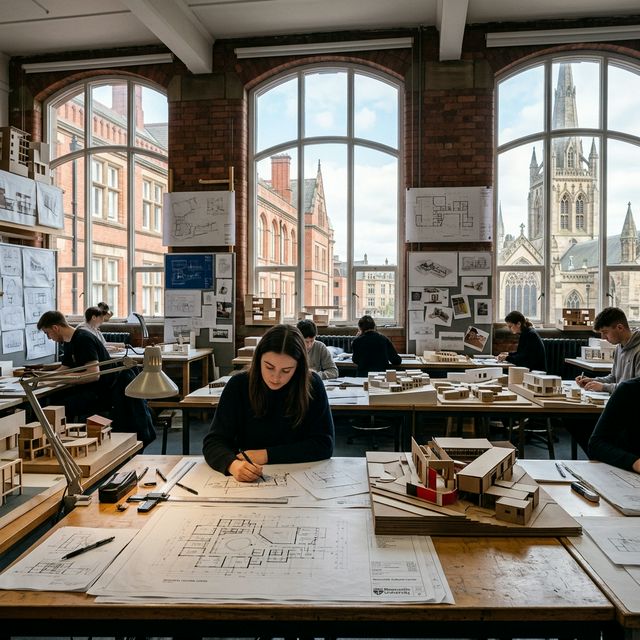
BA Architecture and Urban Planning
About this course
Architecture and urban planning together address the built environment at two complementary scales: the design of individual buildings and spaces, and the planning of the cities, neighbourhoods and regions within which those buildings sit. Architecture asks how spaces can be conceived, drawn, modelled and constructed to serve human needs with beauty, functionality and sustainability. Urban planning asks how land is used, how movement is managed, how development is regulated and how cities can grow and change in ways that are equitable, resilient and liveable. Understanding both disciplines gives you the breadth to contribute to the built environment profession at multiple levels. At the University of Newcastle, this three-year full-time programme helps you find your career path in the built environment, whether that lies in architecture, urban design, urban planning, landscape architecture or other design-related professions. You will develop skills in design studio work, spatial analysis, planning law and policy, urban economics and the technical and visual communication methods used across the built environment professions. A sandwich year gives you extended professional experience, a year abroad broadens your design and planning perspective through exposure to different urban contexts and planning systems, and a work placement provides further hands-on exposure in professional practice. A typical entry tariff of 120 points makes the programme accessible to students from a range of creative and analytical backgrounds. Graduates pursue careers in architectural practice, urban design, town and country planning, housing development, public sector planning, property development, heritage conservation and landscape architecture. The breadth of the programme, spanning architecture and urban planning, gives graduates flexibility in the kinds of built environment roles they can pursue. Most who wish to become registered architects or chartered planners go on to postgraduate professional training, and the programme provides a strong foundation for both pathways.
Syllabus & Modules
Typical curriculumStudent Satisfaction
National Student Survey - 35 respondents (65% response rate)
Similarly Ranked Alternatives


What comes next? 🎓
Choosing the right university starts with choosing the right school. Explore transparent, data-driven school profiles powered by official DfE statistics.
Explore Schools on WhatSchool.ai →