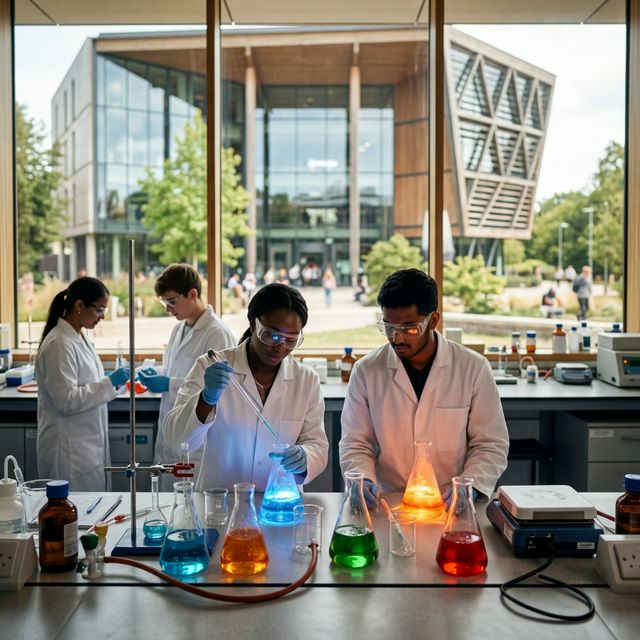
BSc Biochemistry
About this course
Biochemistry is the science of life at the molecular level, exploring how the chemical processes that underpin all living systems work. It investigates the structures and functions of proteins, nucleic acids, lipids and carbohydrates, and the metabolic and signalling pathways through which cells communicate, grow, divide and respond to their environment. Biochemistry sits at the heart of modern biology and medicine, underpinning advances in drug discovery, genetic technology, diagnostics and our understanding of disease at the molecular scale. At the University of Bath, this three-year programme gives you a thorough grounding in the core areas of biochemistry, developing your knowledge of molecular biology, cell biology, enzymology, metabolism and the biochemistry of key biological processes. The curriculum builds towards a final year in which you will undertake a capstone project and deepen your engagement with advanced topics including protein synthesis, folding and turnover. Laboratory work is central to the degree, developing the practical skills needed to work in a research or applied biochemistry environment. Bath's research-active academic community means you will study in an environment where biochemistry is being actively investigated across a range of areas. Graduates in biochemistry go on to careers in pharmaceutical and biotechnology research and development, clinical biochemistry, science communication, patent law, scientific publishing, healthcare and education. Many pursue postgraduate study, including PhD programmes in biochemistry, molecular biology, pharmacology or closely related fields. The combination of molecular knowledge, analytical thinking and laboratory competence that biochemistry develops is valued across all areas of the life sciences and their applications, and the discipline provides one of the strongest foundations available for a career in biomedical science.
Syllabus & Modules
Typical curriculumStudent Satisfaction
National Student Survey - 15 respondents (52% response rate)
Similarly Ranked Alternatives

What comes next? 🎓
Choosing the right university starts with choosing the right school. Explore transparent, data-driven school profiles powered by official DfE statistics.
Explore Schools on WhatSchool.ai →