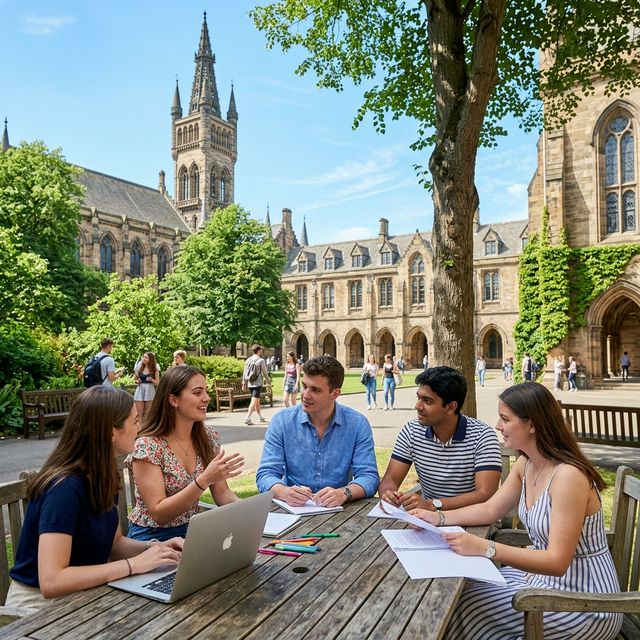
MA(SocSci) Business Economics/Philosophy
About this course
Business Economics and Philosophy is a degree that connects the rigorous analysis of economic forces with the deepest questions about value, knowledge and how we ought to act. Business economics applies the tools of economics specifically to the decisions and environments of business organisations, examining resource allocation, market structure, competitive strategy, the economics of the firm and the broader economic contexts in which businesses operate. Philosophy brings its critical and conceptual resources to bear on fundamental questions: what is the nature of economic rationality, what obligations do firms have to society, how should we think about justice in markets, and what role does uncertainty play in human decision-making? At the University of Glasgow, this four-year full-time programme includes a year abroad and operates within a research-active environment with very high entry expectations. You will develop a comprehensive understanding of how economic forces drive business decisions and global markets, acquiring analytical tools and strategic insights needed to navigate complex and changing economic landscapes. The philosophy component enriches this with a broader critical perspective, developing the conceptual rigour and ethical reasoning that make graduates from this programme genuinely distinctive. Business Economics and Philosophy graduates go on to careers in business, management consultancy, finance, economic policy, public affairs, the civil service, law, academia and research. The combination of economic analytical skill with philosophical rigour is particularly valued in roles that require both quantitative competence and principled thinking about complex and contested questions. Many graduates go on to postgraduate study in economics, business, philosophy or public policy, and the degree provides a strong foundation for doctoral research in economics, management or philosophy.
Syllabus & Modules
Typical curriculumStudent Satisfaction
National Student Survey - 130 respondents (60% response rate)
Similarly Ranked Alternatives
What comes next? 🎓
Choosing the right university starts with choosing the right school. Explore transparent, data-driven school profiles powered by official DfE statistics.
Explore Schools on WhatSchool.ai →