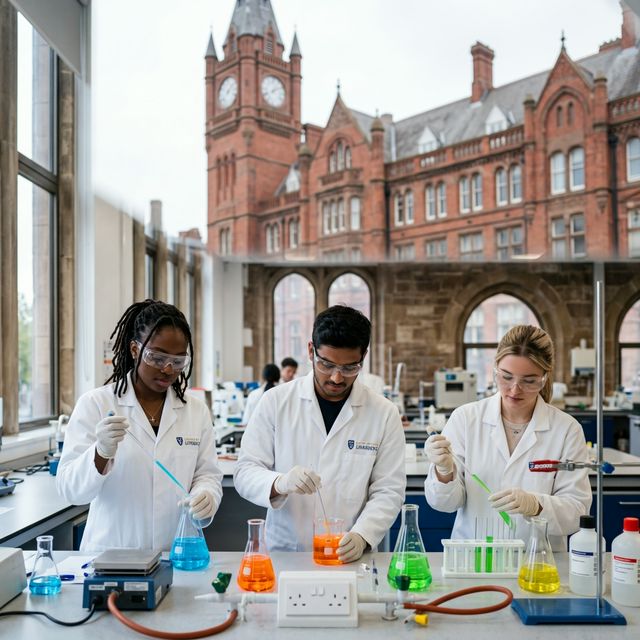
BSc Chemistry with a Year Abroad
About this course
Chemistry is the central science, linking physics and mathematics on one side to biology and medicine on the other. It investigates the composition, structure, and properties of matter and the transformations that occur when substances interact. Everything from the drugs we take and the materials our devices are made of to the atmosphere we breathe and the reactions that sustain life depends on chemistry. Studying it at degree level develops not just a detailed knowledge of chemical principles but the experimental rigour and analytical precision that are among the most valued capabilities in the scientific workforce. This four-year full-time programme at the University of Liverpool includes a year abroad, giving you the opportunity to study at an international partner institution and to experience chemistry research and education in a different national context. International scientific exchange is a normal part of research chemistry, and spending time at an overseas institution is excellent preparation for a career in which collaboration across borders is commonplace. With a typical tariff of 136 points, the programme attracts students with solid foundations in chemistry and mathematics who are ready for the demands of degree-level study in a quantitative science. You will study organic, inorganic, and physical chemistry across the four years, developing practical laboratory skills alongside a rigorous theoretical understanding of chemical bonding, reaction mechanisms, thermodynamics, spectroscopy, and quantum chemistry. The year abroad deepens this formation and may give you access to research environments and specialisms not available at Liverpool. Liverpool's strong chemistry department has active research programmes that inform the teaching throughout the degree. Graduates from chemistry programmes move into careers in the pharmaceutical and chemical industries, materials science, environmental science, analytical laboratories, food science, patent law, science communication, and research. Many continue to postgraduate study, either to a research degree or to a professional conversion such as the Graduate Diploma in Law. The rigorous quantitative training that chemistry provides makes graduates highly versatile across sectors that require careful scientific thinking.
Syllabus & Modules
Typical curriculumStudent Satisfaction
National Student Survey - 45 respondents (59% response rate)
Similarly Ranked Alternatives

What comes next? 🎓
Choosing the right university starts with choosing the right school. Explore transparent, data-driven school profiles powered by official DfE statistics.
Explore Schools on WhatSchool.ai →