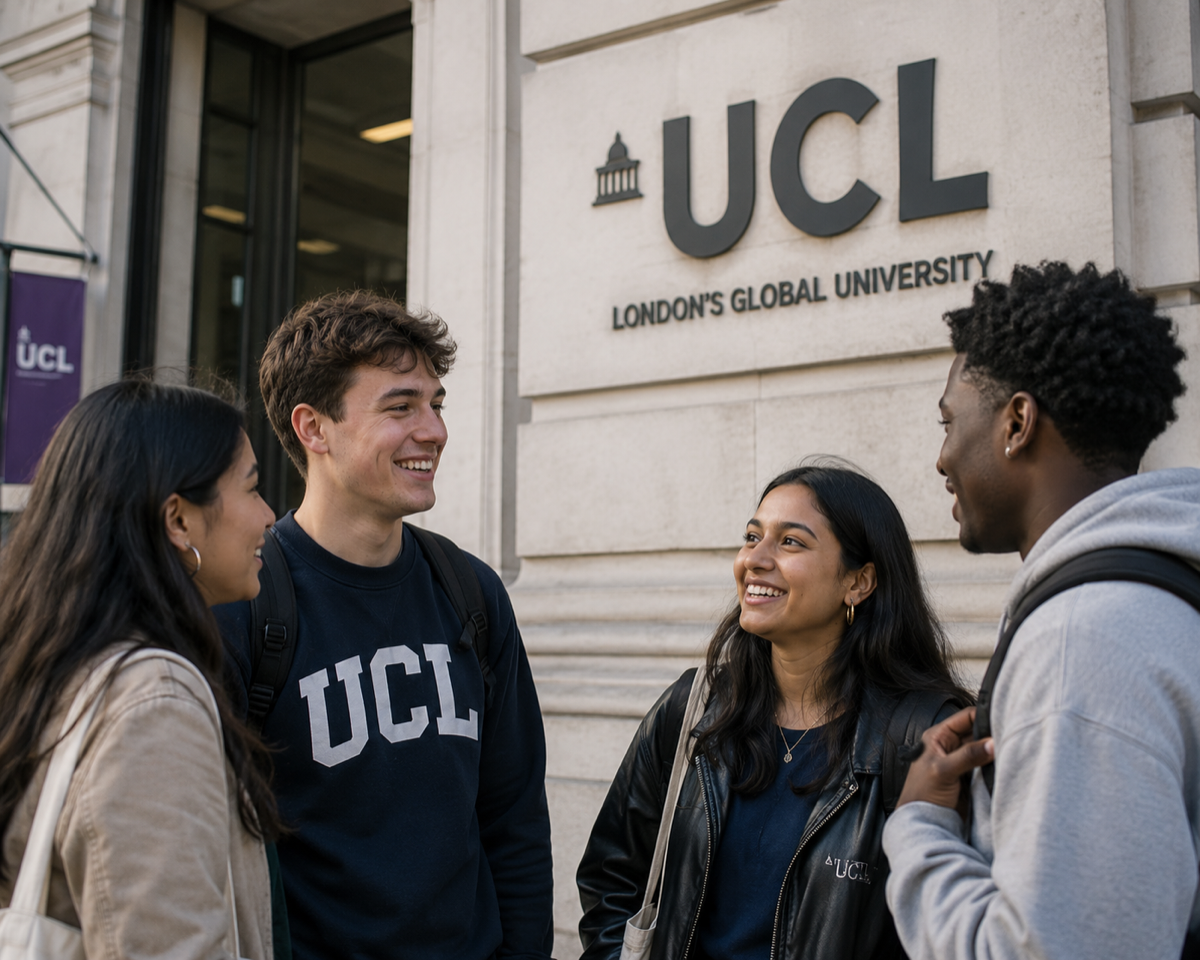
BA Danish and Ukrainian
About this course
Danish and Ukrainian is an unusual and intellectually rich pairing, bringing together two European languages that sit at opposite ends of the continent's political and cultural geography. Danish is a North Germanic language spoken in Denmark and with close relations to the other Scandinavian languages, providing access to one of the world's most prosperous and culturally distinctive societies and to a broader Scandinavian region that is consistently influential in design, sustainability, governance, and the arts. Ukrainian is an East Slavic language that has taken on profound international significance as Ukraine asserts its cultural and political identity on the world stage, with a rich literary tradition and a growing global diaspora. At University College London, this four-year degree develops genuine linguistic competence in both languages alongside a deep engagement with the cultures, literatures, and histories they carry. You will study Danish and Ukrainian from the language-learning stage through to advanced reading of literary and cultural texts, and you will explore the historical and contemporary contexts of both countries and their regions. UCL's School of European Languages, Culture and Society provides a stimulating environment for this kind of comparative and cross-cultural work, with access to faculty who bring research expertise in both language areas. Graduates with this combination of languages have distinctive professional possibilities. Roles in diplomacy, the European Union institutions, international organisations, and the foreign office are natural destinations, particularly given the current international prominence of Ukraine and the strong British relationship with the Nordic countries. Translation and interpreting are further pathways, as are roles in journalism, publishing, and cultural organisations with interests in Scandinavian or Eastern European affairs. Business development roles in companies operating in Denmark or Ukraine draw on both the linguistic and cultural expertise developed in the degree. Some graduates continue to postgraduate study in Slavic studies, Scandinavian studies, linguistics, or European politics and security.
Syllabus & Modules
Typical curriculumStudent Satisfaction
National Student Survey - 10 respondents (52% response rate)
Similarly Ranked Alternatives
What comes next? 🎓
Choosing the right university starts with choosing the right school. Explore transparent, data-driven school profiles powered by official DfE statistics.
Explore Schools on WhatSchool.ai →