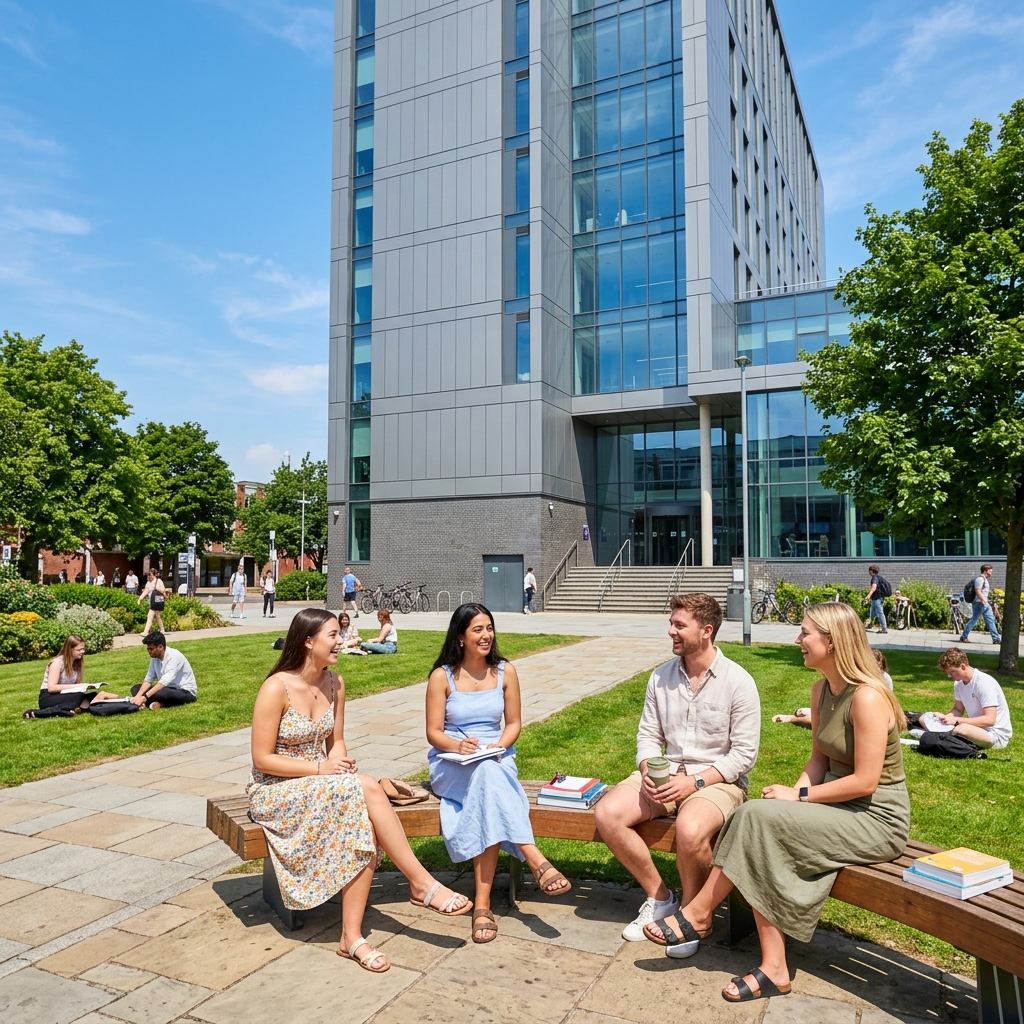
BSc(Econ) Economics, Finance And Banking (London Campus)
About this course
Economics, finance, and banking brings together three interconnected disciplines whose combination equips you to understand how modern economies function and how the financial systems that channel capital within them operate. Economics provides the theoretical and empirical foundation, examining how markets allocate resources, how macroeconomic forces shape growth and stability, and how policy interventions work or fail. Finance extends this into the valuation of financial assets, the analysis of investment decisions, and the management of risk. Banking looks at the institutions through which financial transactions and credit creation take place and the regulatory frameworks designed to keep them stable. At Portsmouth this three-year full-time programme is delivered at the London Campus, and includes a year abroad, giving you international exposure during your studies. The programme draws on Portsmouth's flexibility in offering a paid placement or self-employed year, allowing you to complete professional experience either in your third year or after finishing the main degree, which is an unusual and practical arrangement that accommodates different career timelines. You will study the core areas of economic analysis, financial theory, and banking practice, developing both quantitative and conceptual skills that are directly applicable to careers in the financial sector and beyond. Graduates find careers across financial services, including banking, investment management, financial analysis, corporate finance, risk management, and economic consultancy. The London campus location provides access to one of the world's leading financial centres during your studies, and the placement flexibility enables professional experience to be timed strategically. Many graduates also pursue professional qualifications in finance, accounting, or investment, such as the CFA or ACCA, or continue to postgraduate study in financial economics or related fields.
Syllabus & Modules
Typical curriculumStudent Satisfaction
National Student Survey - 45 respondents (60% response rate)
Similarly Ranked Alternatives

What comes next? 🎓
Choosing the right university starts with choosing the right school. Explore transparent, data-driven school profiles powered by official DfE statistics.
Explore Schools on WhatSchool.ai →