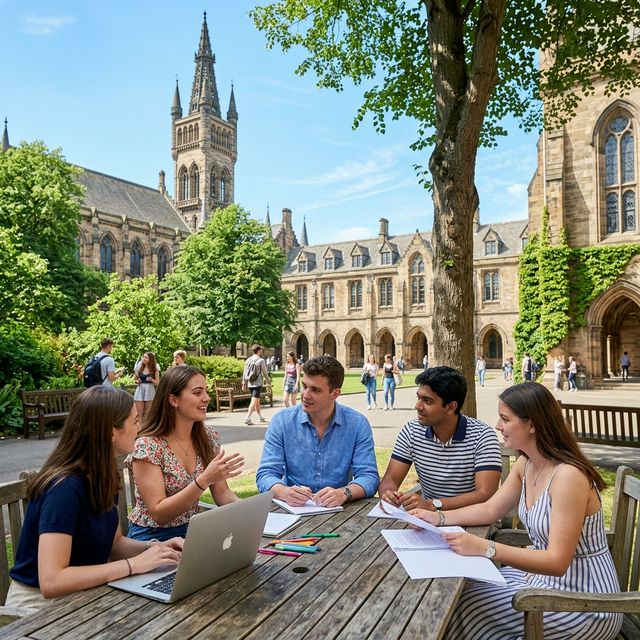
MA(SocSci) Economics/Psychology
About this course
Economics and psychology are disciplines that have long been in productive conversation with each other. Economics explains how individuals and societies make choices about scarce resources, what is produced and consumed, how prices form, and how markets and institutions behave. Psychology examines the cognitive and emotional processes that actually drive human behaviour, including the many ways in which real people depart from the purely rational model that classical economics once assumed. Behavioural economics, which has transformed the field over recent decades, sits precisely at this intersection, and studying both disciplines together gives you a richer and more honest picture of how human beings actually decide and act. At the University of Glasgow, this four-year, full-time degree allows you to develop genuine expertise in both fields. In economics, you will study microeconomic theory, macroeconomics, quantitative methods, and applied areas such as labour markets, public policy, and international trade. In psychology, you will explore cognitive science, developmental and social psychology, research methods, and the neural basis of behaviour. Both disciplines demand rigorous engagement with evidence and argument, and the combination produces graduates who can bring both structural analysis and behavioural insight to real problems. A year abroad is embedded in the programme, giving you the opportunity to study in a different academic environment. The typical entry tariff of 216 points reflects the high academic expectations of a leading research university. Graduates of economics and psychology combinations enter careers in finance, consulting, marketing, public policy, human resources, behavioural science units in government and industry, and research. The combination is particularly well suited to roles in user experience, organisational design, financial regulation, and health economics. Many graduates also go on to postgraduate study in economics, psychology, behavioural science, or related fields.
Syllabus & Modules
Typical curriculumStudent Satisfaction
National Student Survey - 135 respondents (76% response rate)
What comes next? 🎓
Choosing the right university starts with choosing the right school. Explore transparent, data-driven school profiles powered by official DfE statistics.
Explore Schools on WhatSchool.ai →