High Drop-out Rate Alert
69% of students drop out or transfer from this specific course. Consider asking why on an open day.
BEng Electronic and Electrical Engineering
About this course
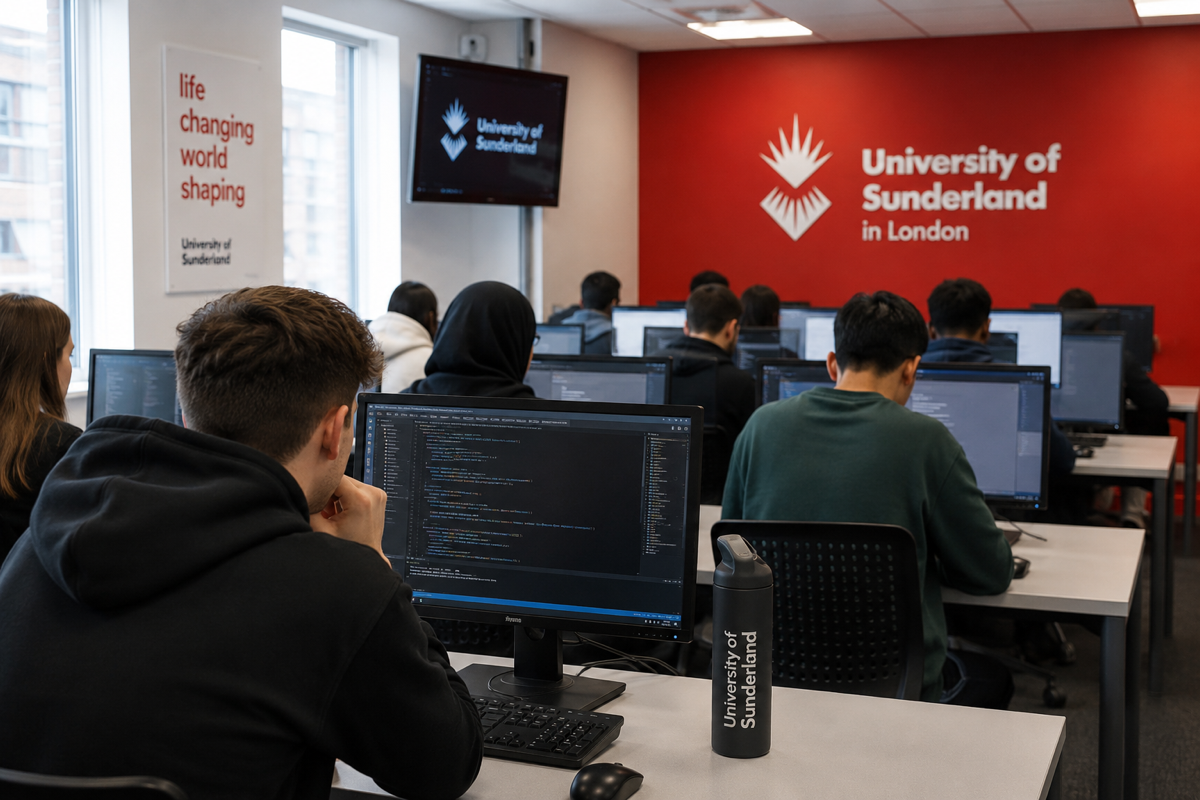
Electronic and electrical engineering underpins virtually every aspect of modern life. From power generation and distribution to communications systems, from medical devices to renewable energy technology, from industrial automation to consumer electronics, the discipline encompasses the design, analysis, and application of systems that generate, transmit, and control electrical energy and information. It is a field defined by both rigorous mathematical theory and highly practical problem-solving, and the two are always in dialogue. At the University of Sunderland you will study across three years on a full-time programme, with a sandwich year that places you in a professional engineering environment, a year abroad for international study, and work placement integrated throughout. This combination of features means the degree is shaped by real industry exposure from an early stage. The curriculum combines fundamental engineering theory, covering electronics, electrical machines, power systems, signal processing, and control theory, with practical work in well-equipped laboratories and design-based projects that develop your ability to propose and evaluate real engineering solutions. Topics including sustainable technologies are woven through the programme, reflecting the growing importance of energy transition and low-carbon engineering in the sector's future. State-of-the-art facilities support hands-on learning, and the sandwich year gives you substantial professional experience before your final year. Graduates work across an extremely wide range of industries. Power and energy companies, defence contractors, automotive and aerospace manufacturers, telecommunications businesses, and technology firms all recruit electronic and electrical engineers. Roles in power systems engineering, electronics design, control and automation, signal processing, and project management are all common directions. The transition to clean energy is creating strong and growing demand for engineers with skills in renewable power, smart grids, and electric vehicles. Chartered engineer status with a relevant professional body is a valued career goal, and further study at masters level supports progression towards that qualification and towards more senior and specialised roles.
Syllabus & Modules
Typical curriculumStudent Satisfaction
National Student Survey - 20 respondents (90% response rate)
Similarly Ranked Alternatives
What comes next? 🎓
Choosing the right university starts with choosing the right school. Explore transparent, data-driven school profiles powered by official DfE statistics.
Explore Schools on WhatSchool.ai →