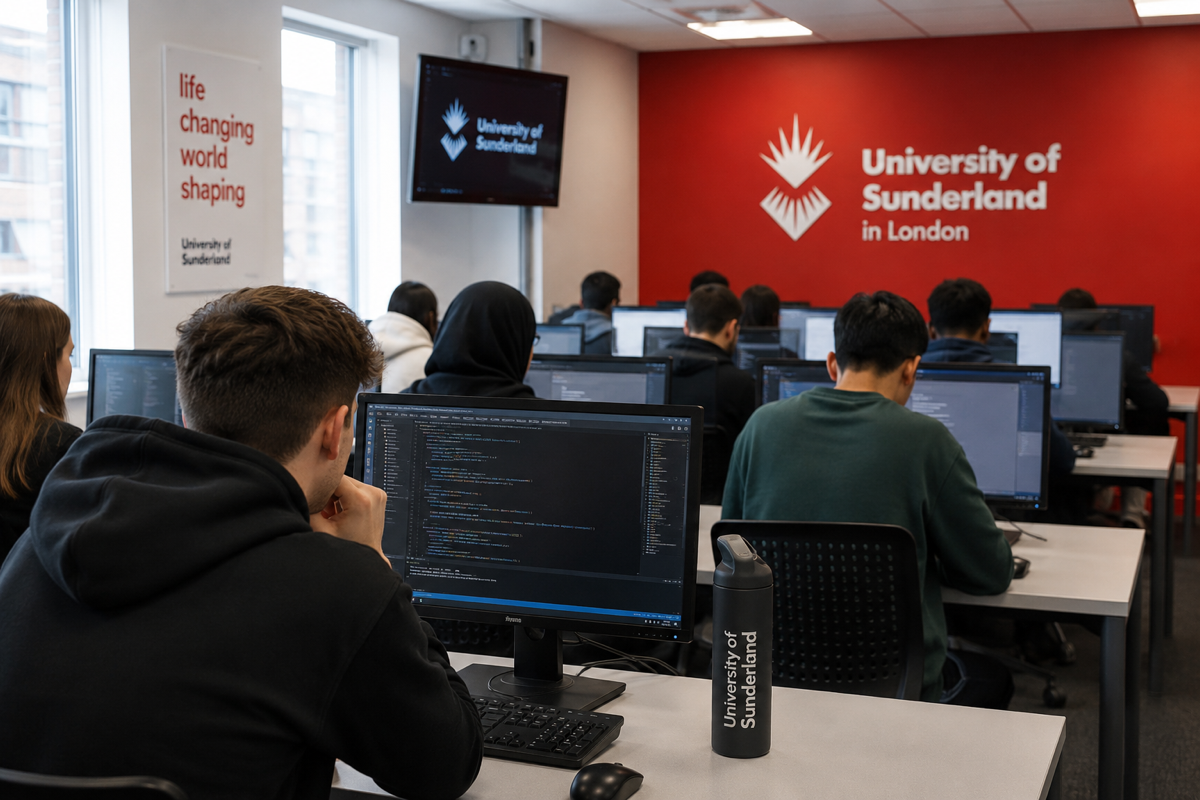
BEng Electronic and Electrical Engineering
About this course
Electronic and electrical engineering is the discipline that underpins the infrastructure of modern society. From the power grids that deliver electricity to homes and industry, to the communication networks that carry data around the world, to the sensors and control systems embedded in everything from cars to medical devices, electronic and electrical engineers design, build, and maintain the systems that modern life depends on. The discipline combines electromagnetic theory, circuit design, signal processing, control systems, and increasingly the software expertise that drives modern electronics. This part-time programme at the University of Sunderland combines fundamental theory with practical experience in state-of-the-art facilities, covering sustainable technologies, design-based learning, and real-world engineering solutions. The part-time format makes the degree accessible to those who are already working or who have other commitments, and the practical emphasis ensures that your learning is always connected to the kinds of problems that practising engineers actually solve. The programme includes a sandwich year, a year abroad, and work placement activity, giving you substantial professional experience in different contexts across your studies. This combination of international exposure and industrial placement is particularly valuable in a discipline that operates globally. Electronic and electrical engineering graduates are in strong demand. Career paths span energy generation and distribution, telecommunications, defence and aerospace, automotive and transport technology, consumer electronics, industrial automation, and the rapidly growing field of renewable energy. The skills you develop, circuit design, systems thinking, project management, and problem-solving under constraints, transfer well across these sectors. The sandwich year and work placement experience typically lead to strong graduate employment outcomes. Postgraduate study in electrical engineering, power systems, robotics, or communications engineering is available for those who wish to specialise further.
Syllabus & Modules
Typical curriculumStudent Satisfaction
Missing Satisfaction Data
The university has not shared complete student satisfaction records for this specific degree metrics block. You may want to formally explore these topics with the university staff at an open day before committing.
What comes next? 🎓
Choosing the right university starts with choosing the right school. Explore transparent, data-driven school profiles powered by official DfE statistics.
Explore Schools on WhatSchool.ai →