MA English and Social Anthropology
About this course
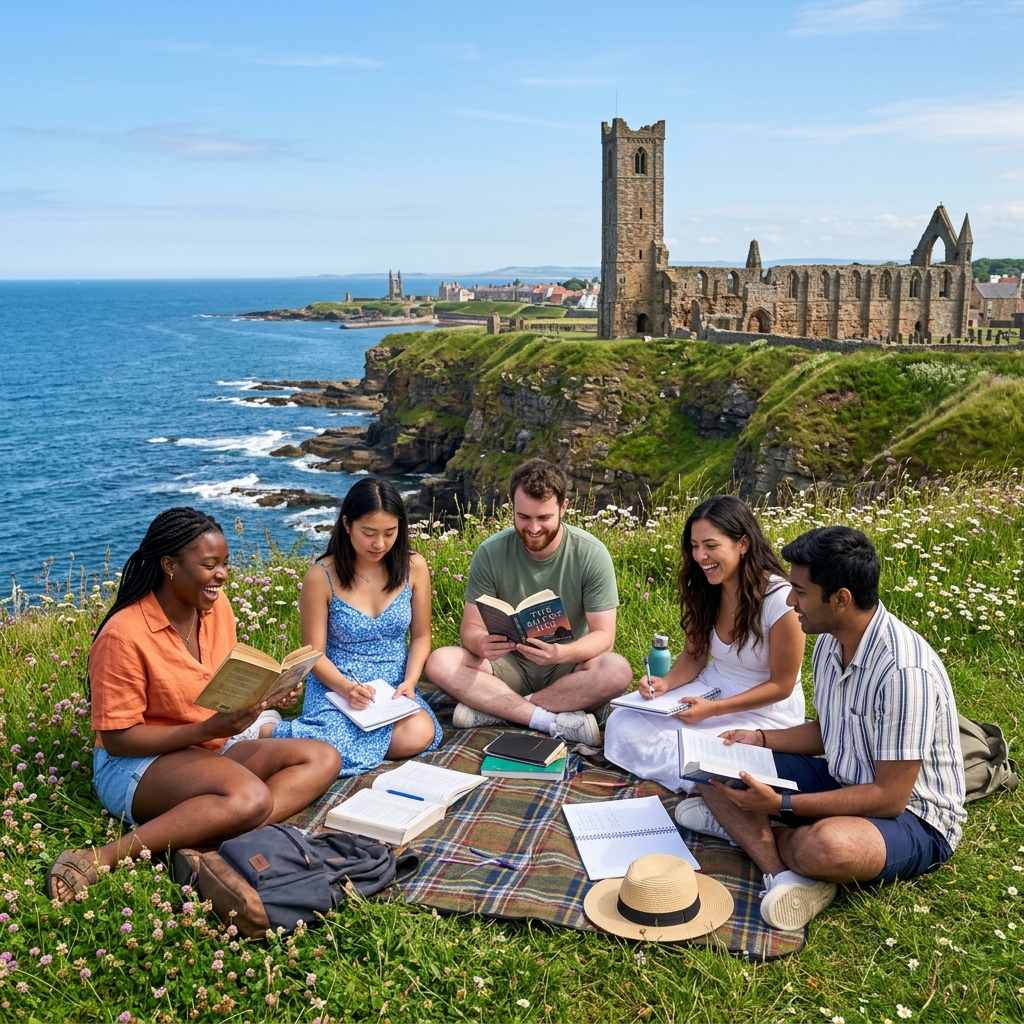
English and social anthropology is a combination that brings two distinct but complementary disciplines to bear on what it means to be human. Literature explores how human experience is represented, imagined, and interpreted through language and narrative. Social anthropology examines how human beings actually live in social groups, how cultures are organised and transmitted, and how the enormous diversity of human societies can be understood through sustained and open-minded engagement with people who live differently from the anthropologist. Together, the two subjects develop a rich and nuanced understanding of human life that goes beyond what either can offer alone. At the University of St Andrews, this four-year programme carries a typical entry tariff of 200 points and includes a year abroad, reflecting the university's high academic expectations and its commitment to international experience as part of a serious education. You will develop your close reading skills in English across genres and historical periods, from the early modern period to the present, engaging with literature in ways that attend to both its aesthetic and its social and cultural dimensions. The social anthropology strand introduces you to ethnographic method, social theory, and the comparative study of human societies, cultures, and institutions. The year abroad gives you the opportunity to study in another country, which is particularly valuable for social anthropology, where direct cross-cultural experience deepens the discipline's most important lessons. St Andrews has research strengths in both English and social anthropology, and the combination reflects the university's tradition of fostering genuine intellectual breadth. Graduates work in education, journalism, international development, public policy, research, the arts, and a wide range of analytical and communicative roles where the ability to understand and represent diverse human experience is valued. Postgraduate study in either discipline, or in cultural studies, development studies, or museum and heritage studies, is a natural next step.
Syllabus & Modules
Typical curriculumStudent Satisfaction
National Student Survey - 40 respondents (68% response rate)
Similarly Ranked Alternatives

What comes next? 🎓
Choosing the right university starts with choosing the right school. Explore transparent, data-driven school profiles powered by official DfE statistics.
Explore Schools on WhatSchool.ai →