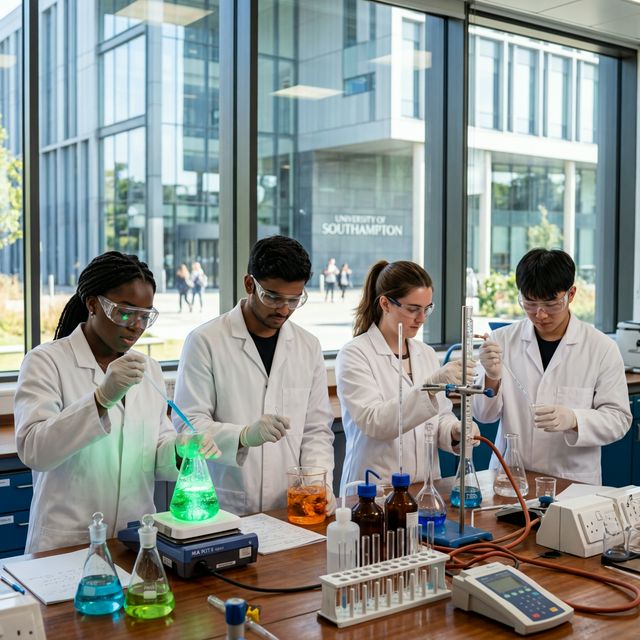
BSc Environmental Science
About this course
Environmental science is the study of the systems and processes that sustain life on Earth and the ways in which human activity is altering them. It is an inherently interdisciplinary discipline, drawing on biology, chemistry, physics, geography and the social sciences to understand environmental problems and to develop the knowledge and tools needed to address them. Climate change, biodiversity loss, pollution, water scarcity and the sustainability of food and energy systems are among the challenges that environmental scientists investigate, making the discipline directly relevant to some of the most pressing questions of our time. This three-year full-time degree at the University of Southampton combines theory with practical and field-based work, developing both your scientific knowledge and your ability to apply that knowledge to real environmental problems. You will explore sustainable solutions to the environmental challenges that society faces today and will face in the future, studying across the physical and biological dimensions of environmental change alongside the human dimensions that determine whether solutions can actually be implemented. The programme develops strong skills in data collection, analysis and interpretation, as well as the ability to communicate scientific findings to different audiences. Graduates work in environmental consultancy, government agencies, conservation organisations, water management, energy, urban planning, environmental monitoring, research and the rapidly growing range of roles concerned with sustainability and the transition to a lower-carbon economy. The combination of scientific rigour and applied focus that the degree provides makes graduates competitive for roles that require both technical knowledge and practical environmental problem-solving. Further study at postgraduate level in environmental science, ecology, sustainability or climate science is a common route for those seeking research or specialist professional roles.
Syllabus & Modules
Typical curriculumStudent Satisfaction
National Student Survey - 30 respondents (73% response rate)
Similarly Ranked Alternatives


What comes next? 🎓
Choosing the right university starts with choosing the right school. Explore transparent, data-driven school profiles powered by official DfE statistics.
Explore Schools on WhatSchool.ai →