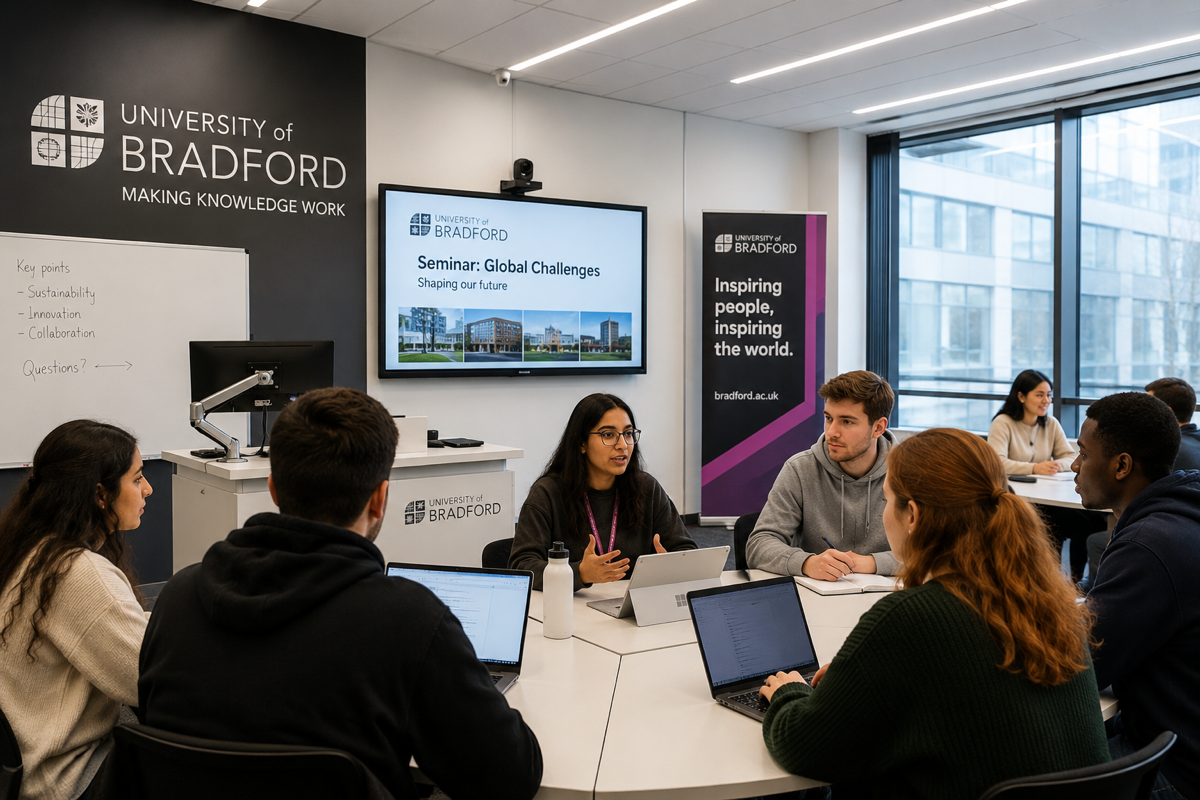
BSc Forensic and Medical Sciences
About this course
Forensic and medical sciences bring together the scientific investigation of crime and the biological and clinical sciences that underlie human health. Forensic science applies chemistry, biology, physics, and analytical methods to the examination of physical evidence in criminal and legal investigations: fingerprints, DNA, toxicology, trace materials, and digital evidence are among the tools of the discipline. Medical sciences add the clinical dimension, examining anatomy, physiology, and pathology in ways that are directly relevant to medicolegal investigations and to the interpretation of biological evidence in courts. This programme at the University of Bradford includes a foundation year for students who need additional scientific preparation before beginning the main degree. Bradford has a strong tradition in forensic and analytical sciences, and the programme reflects the university's commitment to applied, professionally oriented education. You will study organic and analytical chemistry, cell biology, genetics, toxicology, crime scene investigation principles, pathology, and the legal and evidential frameworks within which forensic scientists work. Laboratory skills are central to the programme, and you will develop proficiency in the techniques that are standard in forensic and medical science practice, from chromatography to DNA profiling and microscopy. Graduates from this programme pursue careers in forensic science laboratories, including those working for the police, government agencies, and private forensic providers. Others move into pathology support, healthcare science, the pharmaceutical industry, and regulatory testing. Many graduates also go on to postgraduate study in forensic science, toxicology, biomedical science, or related fields. The combination of forensic and medical science knowledge is particularly useful for careers at the intersection of the two fields, such as forensic pathology support, toxicological analysis in clinical and medicolegal settings, and academic research in forensic and biomedical disciplines.
Syllabus & Modules
Typical curriculumStudent Satisfaction
National Student Survey - 65 respondents (81% response rate)
Similarly Ranked Alternatives



What comes next? 🎓
Choosing the right university starts with choosing the right school. Explore transparent, data-driven school profiles powered by official DfE statistics.
Explore Schools on WhatSchool.ai →