BA Games Art & Design with Diploma in Creative Computing
About this course
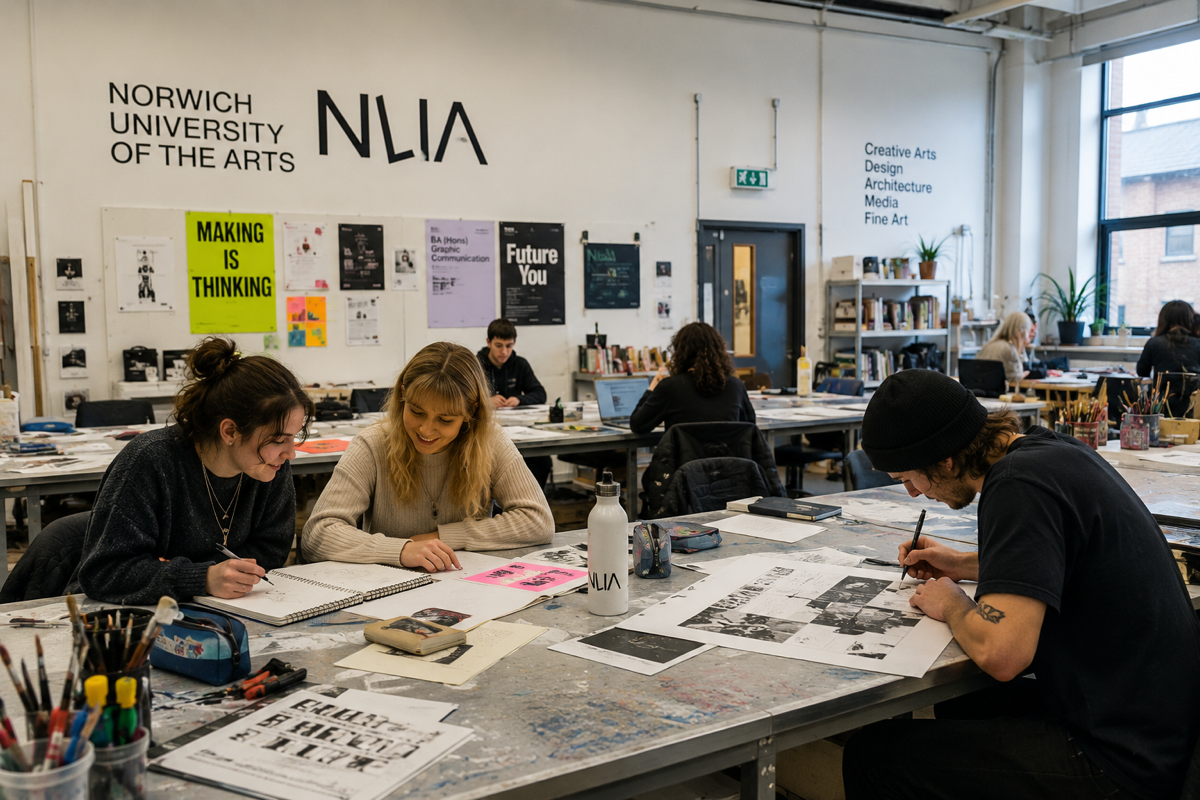
Games art and design sits at the intersection of visual art, digital craft, and interactive media, concerned with creating the characters, environments, objects, and visual worlds that make video games both beautiful and playable. It combines traditional fine art skills, including drawing, painting, and three-dimensional modelling, with the digital tools and technical understanding needed to produce assets that function within real-time game engines. A diploma in creative computing extends this further, adding technical programming and computational thinking to what is already a practically and creatively demanding curriculum. At Norwich University of the Arts, this five-year full-time programme gives you the time and space to develop as both a visual artist and a digital practitioner. You will build skills in character design, environment art, concept art, 3D modelling, texturing, rigging, and animation, working alongside an understanding of how games are built and how art assets fit into the broader production pipeline. The creative computing diploma runs alongside the games art curriculum, introducing you to programming, interactive systems, and the logic of computing in ways that deepen your technical versatility. Studio culture and live project work are central to the experience, preparing you for the collaborative, deadline-driven realities of games production. Graduates from games art and design find employment as character artists, environment artists, concept artists, technical artists, and art directors within games studios ranging from independent developers to large commercial publishers. The additional technical skills from the creative computing diploma open further possibilities in interactive media, visual effects, experience design, and digital art more broadly. Further study at postgraduate level is also an option for those wishing to develop their practice or specialise in particular aspects of games art or digital media.
Syllabus & Modules
Typical curriculumStudent Satisfaction
National Student Survey - 115 respondents (81% response rate)
Similarly Ranked Alternatives



What comes next? 🎓
Choosing the right university starts with choosing the right school. Explore transparent, data-driven school profiles powered by official DfE statistics.
Explore Schools on WhatSchool.ai →