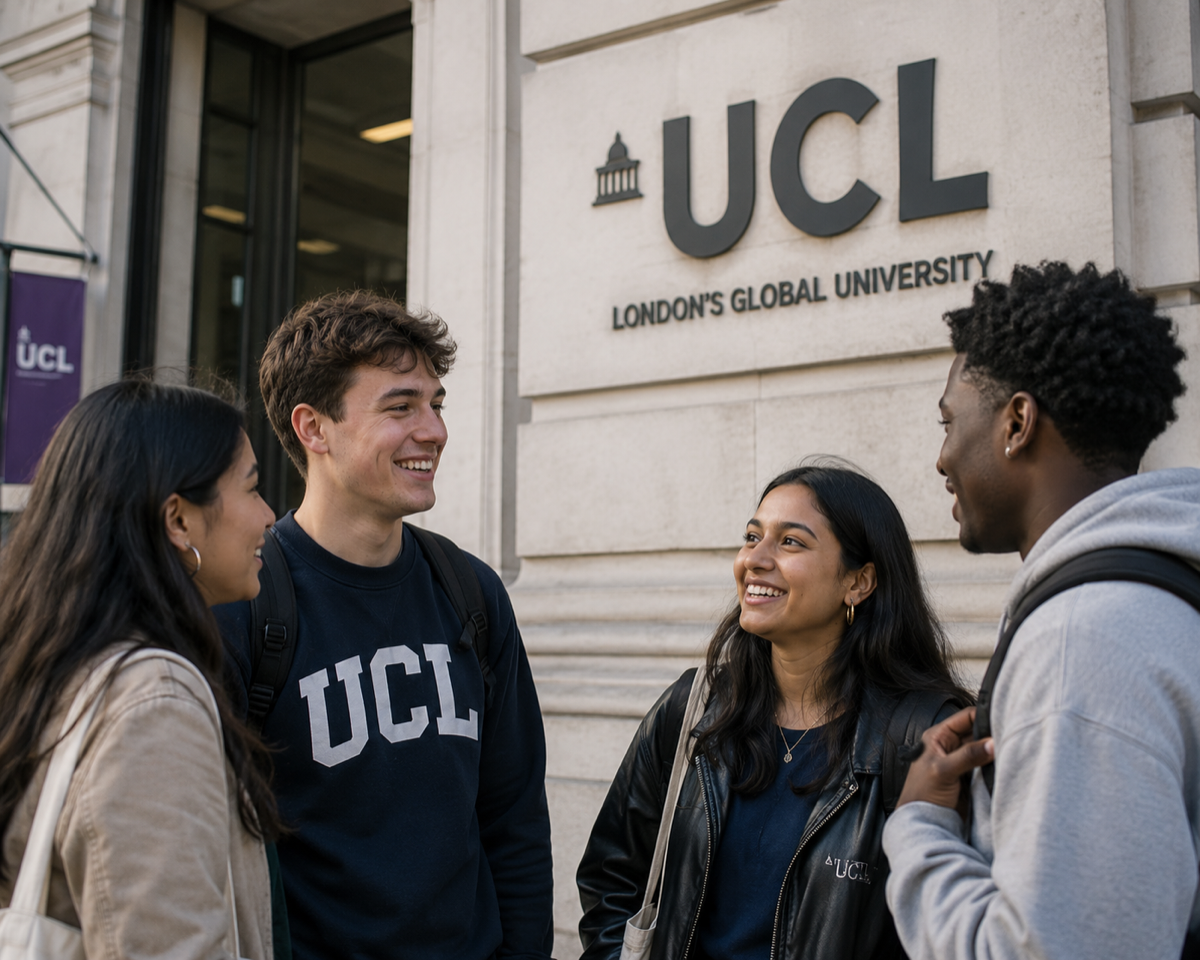
BA German and Ukrainian
About this course
German and Ukrainian is a combination of unusual significance in the current moment, bringing together two major European languages with distinct but deeply entangled histories. German is the most widely spoken native language in the European Union, the language of one of Europe's largest economies, and the vehicle of a philosophical and literary tradition that has shaped the modern world profoundly. Ukrainian, a Slavic language of considerable beauty and a rich literary heritage, is the national language of a country of nearly forty million people whose position at the interface between Eastern and Western Europe has made it one of the most geopolitically significant in the world. At UCL this four-year full-time BA divides its attention equally between the two languages. You will develop proficiency across all four skills, speaking, listening, reading, and writing, with translation forming part of the curriculum in both languages. Cultural study runs alongside language learning, covering literature, history, film, linguistics, politics, and other fields that illuminate the societies in which German and Ukrainian are spoken. A wide range of modules allows you to tailor the degree towards the cultural traditions and historical periods that interest you most. A year abroad in the third year places you in environments where your languages are spoken, providing immersive experience that transforms your linguistic competence and cultural understanding. Graduates are well placed for careers in diplomacy, international affairs, journalism, translation and interpreting, the civil service, international business, education, and cultural institutions. The combination of German and Ukrainian is particularly distinctive in the context of European affairs and international relations. Many graduates also continue to postgraduate study in German, Slavonic studies, European studies, or area studies.
Syllabus & Modules
Typical curriculumStudent Satisfaction
National Student Survey - 10 respondents (52% response rate)
Similarly Ranked Alternatives


What comes next? 🎓
Choosing the right university starts with choosing the right school. Explore transparent, data-driven school profiles powered by official DfE statistics.
Explore Schools on WhatSchool.ai →