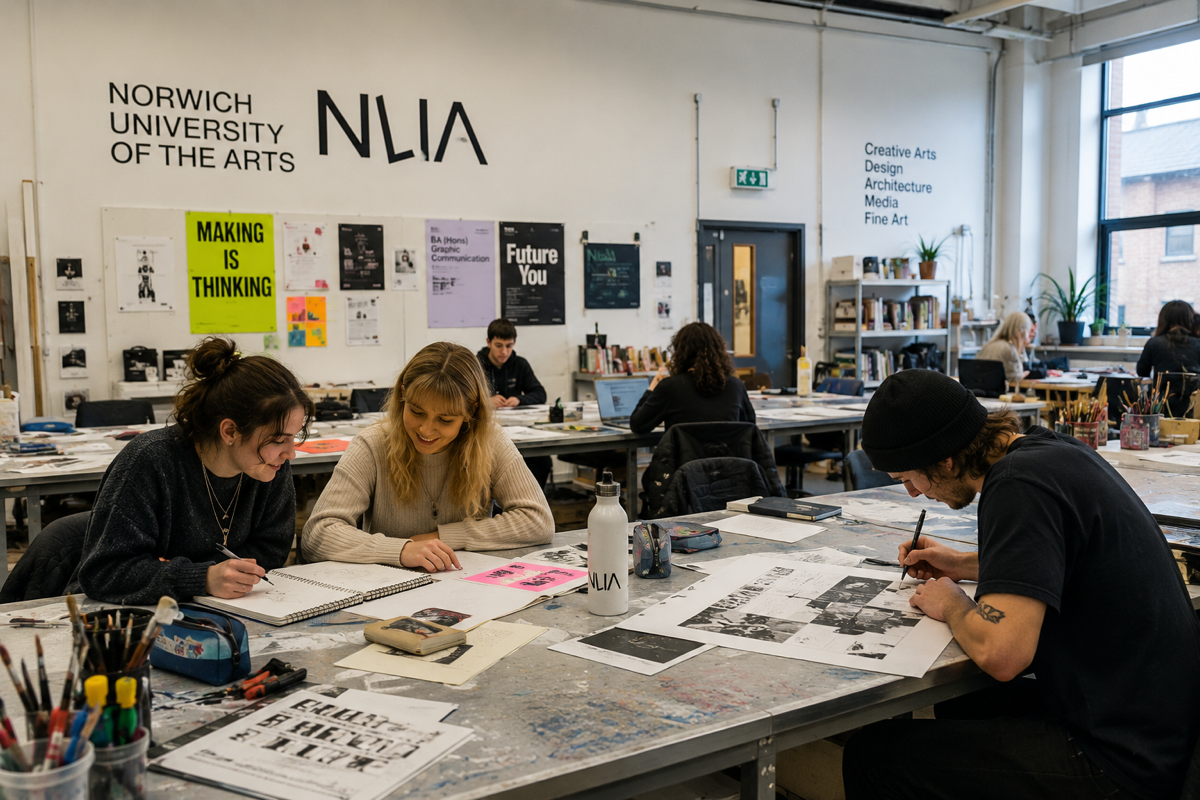
BA Graphic Design with Diploma in Creative Computing
About this course
Graphic design is the discipline of visual communication, the practice of combining typography, image, colour, and space to convey ideas, information, and identity across every medium from printed books and packaging to digital interfaces and motion graphics. It is a field where creative vision and technical craft must work together, and where design decisions are always made in response to a brief, an audience, and a context. Creative computing, meanwhile, is concerned with how computation can be used as a medium for creative expression and problem-solving, bringing together programming, interactive design, data visualisation, and generative approaches to making. At Norwich University of the Arts, this five-year full-time programme combines a graphic design degree with a Diploma in Creative Computing, giving you a distinctive dual qualification that sits at the intersection of design practice and computational creativity. NUA is a specialist creative arts university with strong industry connections, and the combination of graphic design and creative computing positions graduates unusually well for a design industry that is increasingly shaped by digital tools, interactive platforms, and data-driven visual communication. Across the programme you will develop design skills in visual identity, typography, editorial design, and digital media, alongside coding and computational skills that extend your creative repertoire into interactive and generative work. The five-year structure gives you more time to develop both areas of expertise in depth and to build a portfolio that demonstrates a genuinely distinctive creative and technical range. Norwich's creative community and NUA's connections with studios, agencies, and cultural organisations provide a rich professional context for the degree. Graduates move into careers as graphic designers, creative technologists, UX and interface designers, motion designers, and art directors, as well as into roles in digital agencies, publishing, broadcast, gaming, and the cultural sector. The combination of design and computing skills is increasingly valued across all these fields.
Syllabus & Modules
Typical curriculumStudent Satisfaction
National Student Survey - 35 respondents (81% response rate)
Similarly Ranked Alternatives
What comes next? 🎓
Choosing the right university starts with choosing the right school. Explore transparent, data-driven school profiles powered by official DfE statistics.
Explore Schools on WhatSchool.ai →